
As wildfire smoke from Canada drifted across northern Illinois today, air quality conditions deteriorated rapidly throughout the Chicago metropolitan area. Public monitoring stations reported Air Quality Index (AQI) levels reaching the Unhealthy and Very Unhealthy categories, prompting air quality alerts across the region. (AirNow.gov)
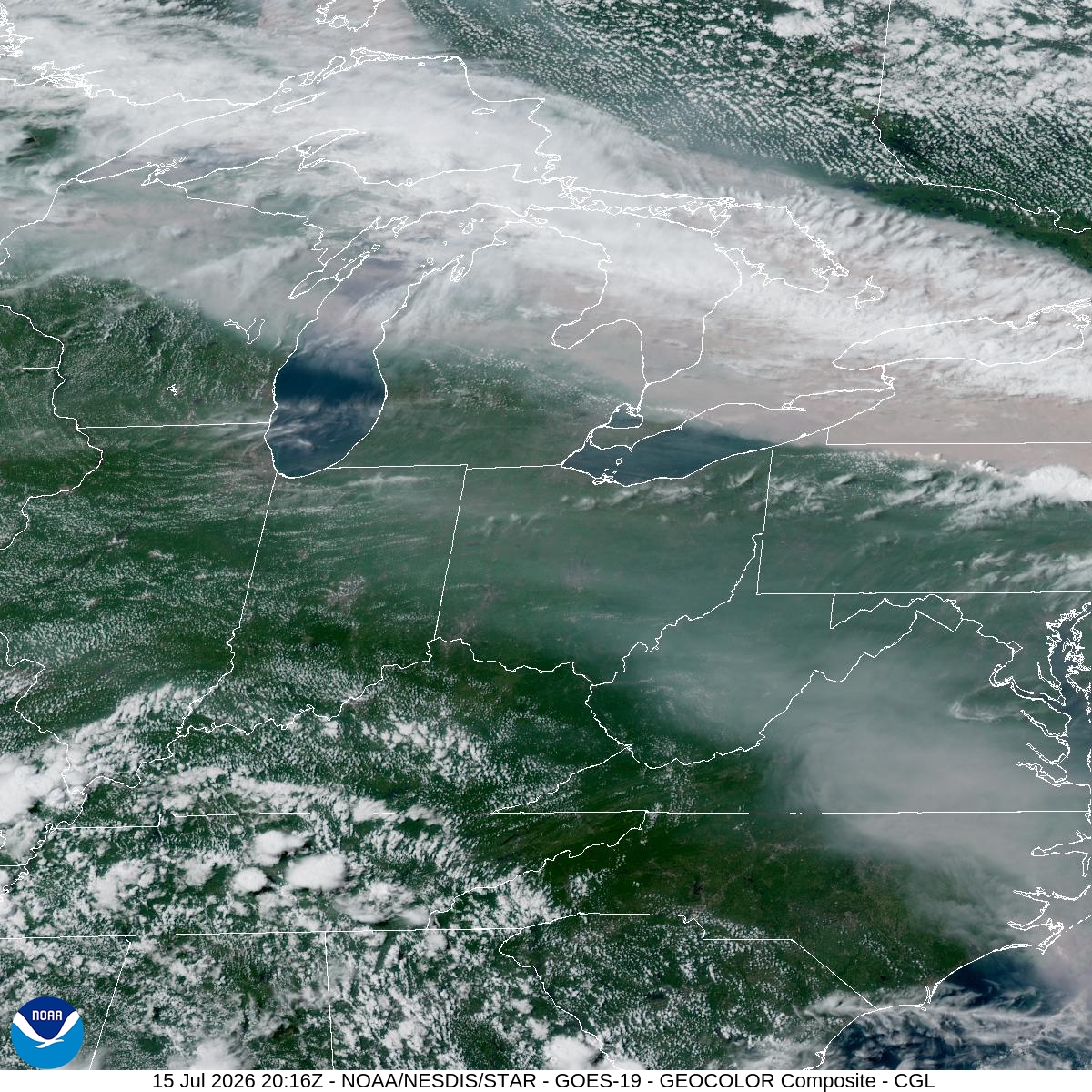
Satellite view of wildfire smoke streaming across the Great Lakes and Chicago region. Source: NOAA/NESDIS/STAR, GOES-19 GeoColor Composite.
RHP Risk Management’s (RHP) Certified Industrial Hygienists (CIHs) conducted a real-time demonstration comparing airborne particle counts outside and inside our Elk Grove Village office to illustrate the differences observed during the wildfire smoke event.
Using an AeroTrak® handheld particle counter, RHP measured outdoor particle concentrations across multiple size ranges and compared them with indoor measurements collected under normal occupancy and HVAC operating conditions.
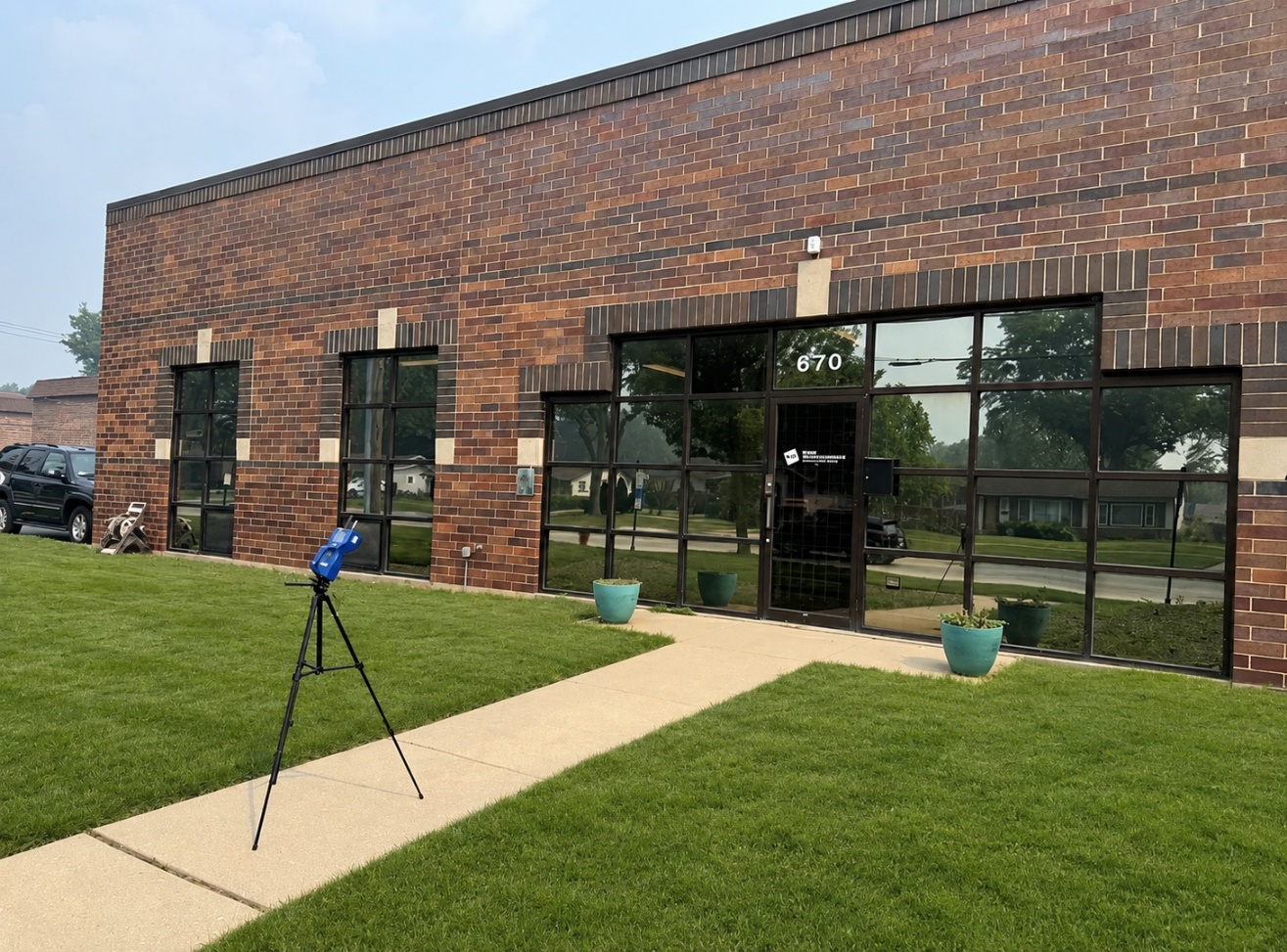
Figure 1. Outdoor AeroTrak® real-time particle monitoring conducted at RHP Risk Management’s Elk Grove Village office during the July 16, 2026 Canadian wildfire smoke event.
While public AQI values provide an excellent indication of regional conditions, they do not necessarily reflect the air quality inside individual buildings. Factors such as HVAC filtration, building pressurization, ventilation rates, and air leakage can significantly influence indoor particulate levels.

Click to Enlarge
RHP’s real-time AeroTrak® demonstration found that particle levels were much lower indoors than outside at the time of testing. Outdoor particle counts were higher in every size range measured, with the greatest differences seen among particles between 1.0 and 3.0 micrometers. The results show that indoor particle levels can be affected by many features of a building, including how the HVAC system operates, the type and condition of its filters, whether the building maintains positive air pressure, how much outdoor air enters through ventilation, and how much air leaks through doors, windows, and other openings. This was a limited demonstration, not a full building or exposure assessment. It was not intended to determine which specific building feature caused the lower indoor readings, measure employee exposure, or evaluate the overall effectiveness of the HVAC system.
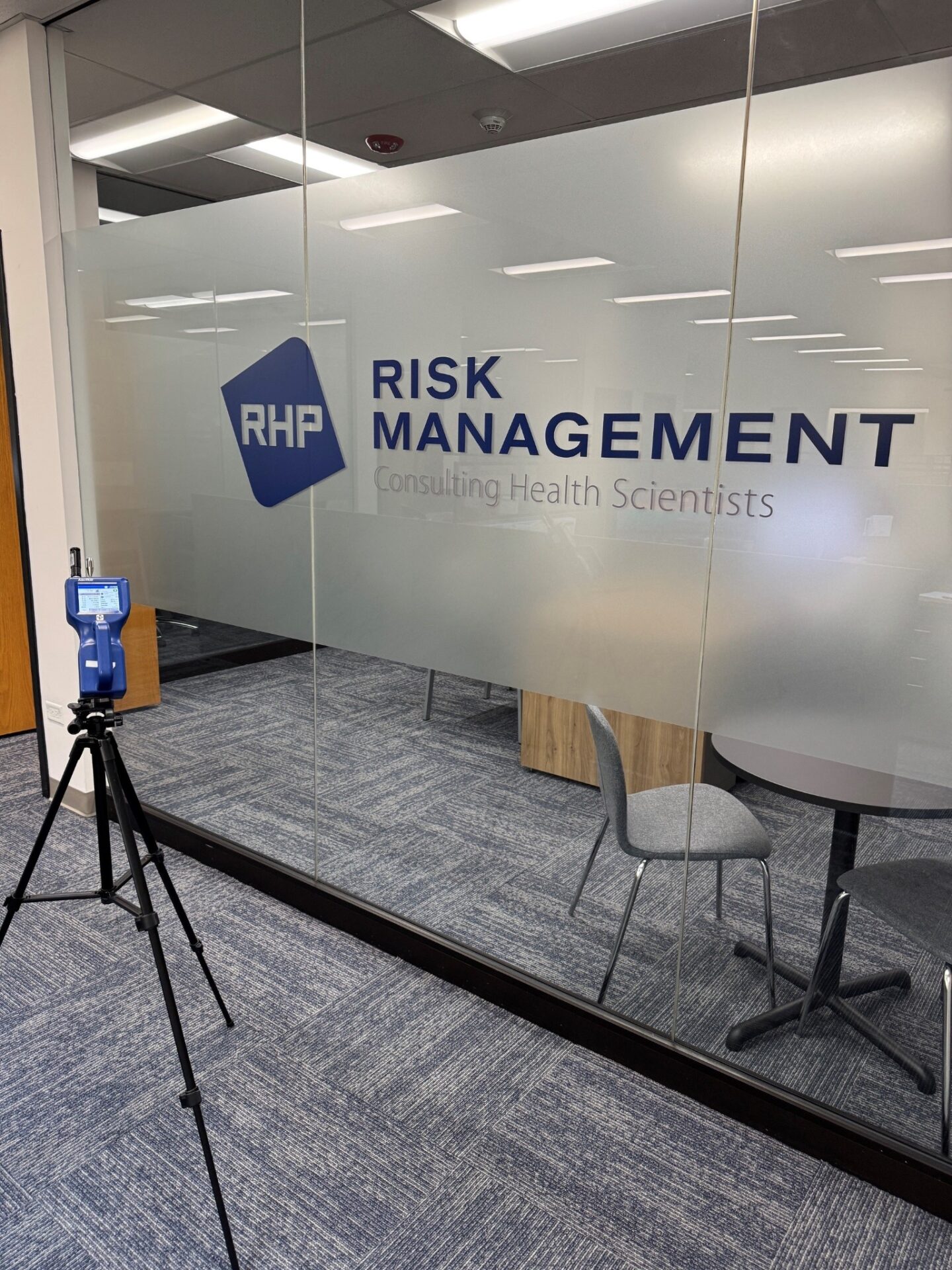
Figure 2. Indoor AeroTrak® monitoring performed under normal HVAC operating conditions inside RHP Risk Management’s Elk Grove Village office.
The demonstration underscores the fact that building-specific conditions matter. Two facilities located only blocks apart can experience different indoor particle levels depending on HVAC operation, filtration efficiency, outdoor air intake, building pressurization, envelope integrity, occupant activities, and operational practices. A properly designed industrial hygiene or indoor air quality assessment can evaluate these factors when an organization needs conclusions regarding workplace conditions, potential employee exposures, or control effectiveness.
Why Is Chicago’s Air Quality So Poor Today?
The elevated particulate concentrations measured today are the result of smoke transported hundreds of miles from active Canadian wildfires. Although the fires are burning far from Illinois, fine particulate matter (PM2.5) can remain suspended in the atmosphere for days and travel across much of North America.
According to the U.S. EPA and Illinois Department of Public Health (IDPH), PM2.5 is the primary pollutant of concern during wildfire smoke events because these particles are small enough to penetrate deep into the lungs and may enter the bloodstream.
What Employers Should Know
For many organizations, wildfire smoke is often viewed as a public health issue. However, for employers, it also represents a workplace exposure concern that can affect employee health, productivity, and business operations. Whether employees work outdoors or occupy office buildings, manufacturing facilities, warehouses, schools, or healthcare environments, deteriorating ambient air quality has the potential to increase occupational exposures to fine particulate matter (PM2.5).
While OSHA has not established a nationwide wildfire smoke standard, employers remain responsible under the Occupational Safety and Health Act’s General Duty Clause (Section 5(a)(1)) to provide employees with a workplace free from recognized hazards that are likely to cause death or serious physical harm. As wildfire smoke events become more frequent throughout North America, employers should evaluate whether these events present a foreseeable hazard to their workforce and determine appropriate protective measures.
EPA, IDPH, and Public Health Recommendations
The U.S. Environmental Protection Agency (EPA), Illinois Department of Public Health (IDPH), Centers for Disease Control and Prevention (CDC), and local health agencies recommend that organizations monitor AQI conditions and adjust activities as air quality deteriorates. During periods when AQI reaches the Unhealthy (151–200) or Very Unhealthy (201–300) categories, employers should consider implementing additional protective measures, particularly for employees who work outdoors or perform physically demanding tasks.
Recommended actions include:
- Monitoring current AQI conditions throughout the workday using AirNow or other official air quality resources.
- Limiting prolonged or strenuous outdoor work when air quality reaches unhealthy levels.
- Rescheduling non-essential outdoor activities when feasible.
- Rotating employees to reduce individual smoke exposure.
- Increasing the frequency of recovery breaks in clean indoor environments.
- Providing training so employees recognize the signs and symptoms of smoke-related illness.
Protecting Outdoor Workers
Outdoor employees, including construction workers, utility crews, landscapers, transportation personnel, municipal workers, and others, typically experience the highest potential exposures during wildfire smoke events.
Employers should evaluate work schedules based on changing AQI conditions and consider engineering or administrative controls before relying on personal protective equipment. Where respiratory protection is appropriate, employers should remember that respirator use may trigger requirements under OSHA’s Respiratory Protection Standard (29 CFR 1910.134), including medical evaluations, fit testing, and training when respirators are required by the employer.
Don’t Forget About Indoor Air Quality
Many organizations assume that moving employees indoors eliminates concerns associated with wildfire smoke. In reality, indoor air quality depends on numerous factors, including HVAC operation, outdoor air intake, building envelope integrity, filtration efficiency, occupant activities, and maintenance practices.
Buildings equipped with properly functioning ventilation systems and high-efficiency filtration may substantially reduce particulate concentrations indoors. Conversely, facilities with aging HVAC systems, inadequate filtration, or excessive outdoor air infiltration may experience elevated indoor particulate levels despite employees working inside.
Because every building performs differently, public AQI values alone cannot characterize actual indoor conditions or determine employee exposure within a specific workplace.
Why Workplace Air Monitoring Matters
Regional air quality data provides an excellent overview of conditions across a metropolitan area, but it cannot answer important workplace-specific questions such as:
- How much wildfire smoke is entering my facility?
- Is our HVAC system effectively reducing particulate concentrations?
- Are employees experiencing elevated indoor exposures?
- Are current ventilation and filtration practices providing adequate protection?
- Should operational or engineering controls be modified during smoke events?
Real-time particle counting can be one component of a broader industrial hygiene or indoor air quality assessment. When combined with a project-specific monitoring strategy, ventilation and building evaluations, other environmental measurements, and interpretation by qualified professionals, these assessments provide building-specific information that regional monitoring stations cannot supply.
For employers responsible for protecting worker health, a properly designed assessment can provide scientifically defensible data for evaluating potential workplace exposures, supporting risk-management decisions, and identifying appropriate engineering, administrative, or respiratory protection measures.
How RHP Risk Management Can Help
Wildfire smoke events are becoming an increasingly common challenge for employers throughout the Midwest and across North America. RHP’s CIH’s and environmental, health, and safety professionals apply exposure science, workplace monitoring, ventilation evaluation, and professional judgment to help organizations understand how changing outdoor air quality may affect their facilities and employees.
RHP’s ambient air quality, industrial hygiene, and environmental health services include:
- Ambient and workplace air quality monitoring
- Real-time particle counting and particulate monitoring
- Indoor air quality investigations
- HVAC, ventilation, and building-performance evaluations
- Occupational exposure assessments
- Exposure monitoring strategy development and data interpretation
- Regulatory and occupational health compliance support
- Engineering, administrative, and respiratory protection recommendations
Whether responding to a regional wildfire smoke event, investigating employee concerns, or evaluating workplace air quality and ventilation, RHP provides scientifically defensible monitoring and practical guidance to support informed environmental, health, and safety decisions.
Contact RHP Risk Management at (866) 481-8188.