
Key Takeaways:
- RHP scientists analyze epidemiologic literature regarding potential human health hazards.
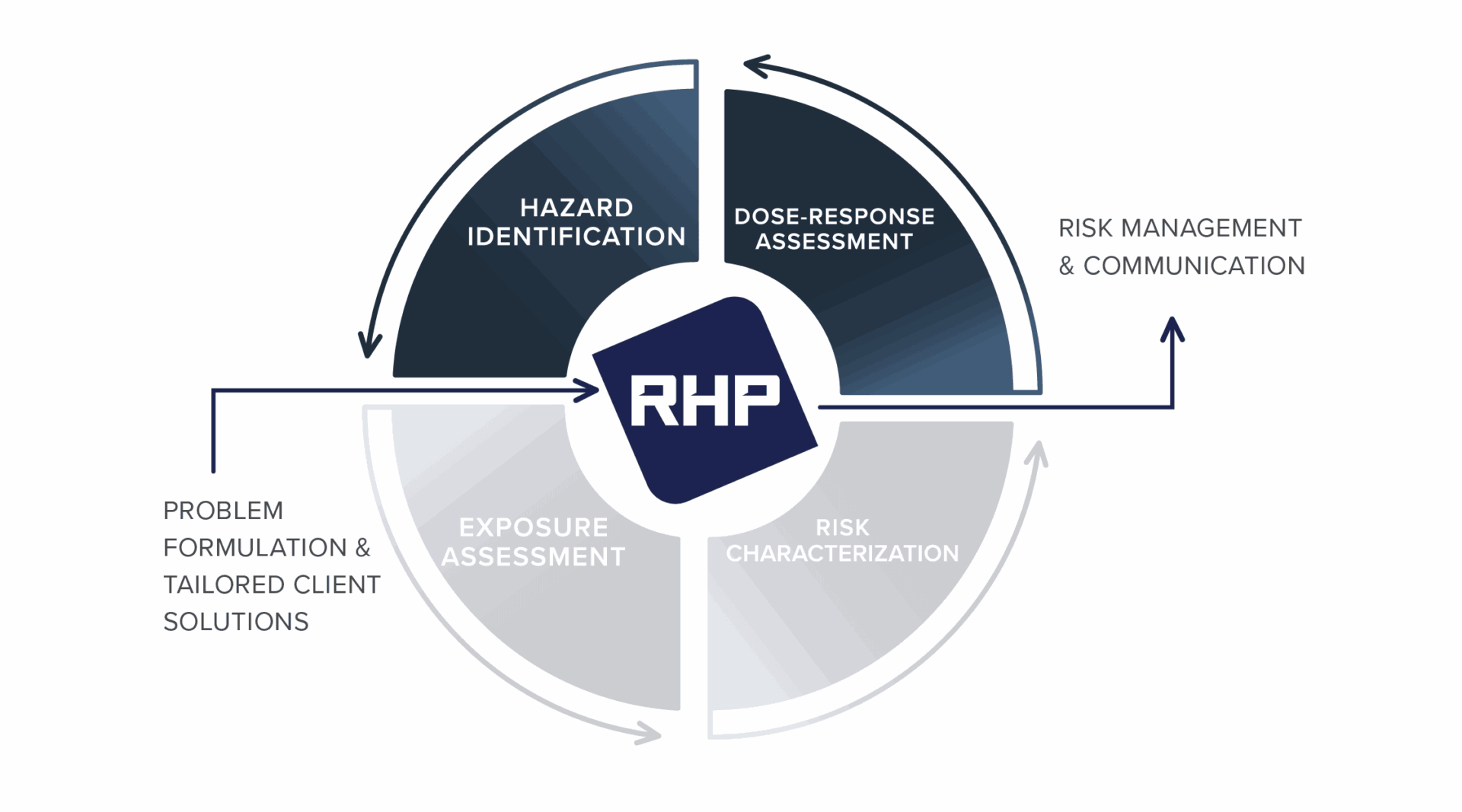
- We apply dose-response analysis and weight-of-evidence frameworks to characterize potential human health risks.
- RHP’s experts examine the totality of scientific literature, including toxicological and exposure data, to assess evidence of causation for specific human health outcomes.
- We support the design and conduct of epidemiologic studies, including consideration of important confounders, statistical analyses, and risk communication of results.
- RHP translates complex scientific findings into clear, decision-ready insights for clients.
Population-Based Science to Evaluate Exposure-Disease Relationships and Inform Human Health Risk Decisions
Epidemiology provides critical evidence for understanding whether environmental or occupational exposures are associated with adverse health outcomes in human populations. RHP’s epidemiologists analyze complex datasets and scientific literature to evaluate exposure-disease relationships and interpret the strength of evidence linking environmental agents to health effects.
Our team integrates epidemiology with toxicology, exposure science, and risk assessment to evaluate causation and characterize population-level risk. Using rigorous scientific methodology and transparent analytical approaches, RHP develops evidence-based conclusions that support regulatory compliance, product safety and stewardship decisions, public health policy, and litigation.
RHP scientists translate complex epidemiologic findings into clear, decision-ready insights that withstand scrutiny from regulators, courts, and the scientific community.
RHP’s Epidemiology Services
Evaluation of Exposure-Disease Relationships
Analysis of epidemiologic studies to assess associations between environmental or occupational exposures and health outcomes, including development and evaluation of study design, confounding, exposure characterization, and statistical methodology.
Systematic Review and Evidence Integration
Comprehensive review and synthesis of epidemiologic literature to evaluate the strength, consistency, and biological plausibility of reported associations.
Causation and Weight-of-Evidence Analysis
Application of established frameworks to assess whether epidemiologic evidence supports casual relationships between exposures and disease outcomes.
Population Risk Assessment
Evaluation of epidemiologic data to estimate population level risk and inform human health risk assessments used in regulatory and policy decision-making.
Scientific Support for Regulatory and Legal Decisions
Preparation of technical reports, expert analyses, and scientific evaluations supporting regulatory submissions, product safety evaluations, and litigation.
What RHP Delivers
- Evaluation of environmental and occupational exposure-disease associations.
- Critical review of epidemiologic literature and regulatory evidence.
- Cohort, case-control, and cross-sectional study design or interpretation.
- Population risk characterization and public health impact analysis.
- Integration of epidemiology with toxicology and exposure science.
- Preparation of expert reports and technical evaluations for regulatory and legal proceedings.
Contact RHP experts to reduce uncertainty and enable confidence in decision-making by delivering reliable, reproducible, and relevant data. Through early and active stakeholder engagement, we provide customized solutions that support clients with their specific goals.
Frequently Asked Questions
Environmental epidemiology is the study of how environmental exposures are distributed in human populations and whether those exposures are associated with health outcomes. It uses population data, exposure information, study design, and statistical analysis to evaluate exposure-disease relationships and inform public health, regulatory, and risk-management decisions.
Common epidemiological study designs include:
• Cohort studies, which follow exposed and unexposed groups over time
• Case-control studies, which compare prior exposures among people with and without an outcome
• Cross-sectional studies, which examine exposure and health status at a defined point in time
• Systematic reviews, which synthesize findings across relevant studies
Researchers evaluate an exposure-disease relationship by examining study design, exposure characterization, outcome measurement, statistical results, potential confounders, consistency across studies, and biological plausibility. The goal is to determine whether the evidence supports an association and how strongly the findings may inform a causation or risk assessment conclusion.
Confounding occurs when another factor is related to both an exposure and a health outcome, making the observed relationship difficult to interpret. Epidemiologists address confounding through study design, data collection, stratification, statistical adjustment, and sensitivity analyses so conclusions more accurately reflect the evidence.