
Exposure Sciences
Defensible, data-driven exposure science — from laboratory testing and monitoring to reconstruction, modeling, and risk interpretation.
Talk with an Exposure Scientist →
Exposure Science at a Glance
RHP delivers end-to-end exposure science support — from laboratory testing and exposure monitoring to reconstruction, modeling, and risk interpretation.
Our A2LA Accredited Exposure Sciences Laboratory (ESL) enables real-world simulation of product use and measurement of chemical releases under controlled conditions.
We generate scientifically defensible, reproducible exposure data that support regulatory, product, and litigation decisions.
Clients rely on RHP to translate complex exposure data into clear, decision-ready insights.

A2LA Accredited Exposure Sciences Laboratory
RHP's Exposure Sciences Laboratory (ESL) holds A2LA accreditation — independent, third-party verification that our testing methods, equipment, and quality systems meet rigorous international standards (ISO/IEC 17025). That means every exposure study we run is backed by data you can defend in front of regulators, courts, and clients.
Exposure Sciences: Defensible, Data-Driven, and Decision-Ready
Quantifying exposure is critical to understanding and managing risk. RHP Risk Management helps organizations measure, reconstruct, and interpret chemical exposures using laboratory testing, field-informed monitoring, and advanced modeling techniques. Through our A2LA Exposure Sciences Laboratory (ESL) and scientifically accepted methods, we generate reliable, relevant, and reproducible data that reflect real-world conditions. Our integrated approach supports regulatory compliance, product stewardship, and risk management by providing clear, defensible exposure insights that withstand scientific and legal scrutiny.
How RHP Supports Exposure Sciences
Five integrated capabilities behind every defensible exposure assessment
Exposure Assessment
We measure real-world exposures using laboratory testing, exposure monitoring, and simulation studies. Our ESL enables controlled evaluation of product use and airborne contaminant release, generating high-quality data that quantify exposure intensity and variability.
Exposure Reconstruction
When direct measurements are unavailable, we reconstruct exposures using mathematical models, historical records, and scenario-based analysis to define relationships between chemical release, environmental transport, and human exposure.
Statistical Analysis & Modeling
We apply advanced statistical tools, including Monte Carlo analysis, to evaluate uncertainty and variability in exposure data — strengthening conclusions and delivering decision-ready outputs for complex exposure scenarios.
Product Use Simulation
We design and conduct simulation studies to evaluate chemical exposures during consumer and workplace product use, using reconstructed or laboratory-prepared formulations to address key uncertainties.
Risk Interpretation
We integrate exposure findings with toxicological and epidemiological evidence to support risk characterization, identification of safer alternatives, and development of targeted risk management strategies.
A2LA Accredited Exposure Sciences Laboratory
Meet Our Experts


RHP’s Exposure Science Services
A one-page overview of RHP’s exposure science capabilities — from laboratory testing and monitoring to reconstruction, modeling, and risk interpretation.
Click to Download →What RHP Delivers
- Defensible exposure assessments based on laboratory testing, monitoring, and modeling.
- Exposure reconstruction for historical and data-limited scenarios.
- Simulation-based data that address critical uncertainty and data gaps.
- Statistical analyses that support robust interpretation of exposure variability.
- Decision-ready exposure insights for regulatory compliance, product stewardship, and litigation support.
Contact RHP experts to reduce uncertainty and enable confidence in decision-making by delivering reliable, reproducible, and relevant data. Through early and active stakeholder engagement, we provide customized solutions that support clients with their specific goals.
Frequently Asked Questions
Exposure modeling uses mathematical or statistical methods to estimate chemical concentrations, doses, or exposure patterns under defined scenarios. Models can combine source strength, release duration, environmental transport, product use, contact rates, and other inputs to evaluate variability and uncertainty when measurements alone do not answer the question.
Exposure assessment is the process of estimating how much of a chemical or other agent people encounter, through which route, how often, and for how long. It may use laboratory testing, field monitoring, product-use simulations, records, and exposure models to develop data for risk characterization and risk management.
Exposure reconstruction is the estimation of past or otherwise unmeasured exposure using available records, scientific literature, mathematical models, product information, and scenario assumptions. It helps characterize historical dose or concentration when direct measurements from the original exposure event are incomplete or unavailable.
Exposure assessment may use laboratory testing and controlled product-use simulation; personal, area, or environmental exposure monitoring; historical exposure reconstruction; mathematical and statistical exposure modeling; and Monte Carlo analysis to examine variability and uncertainty.
Exposure Science in Practice

Conventional vs. New Technologies for Validating Engineering Controls
RHP investigated whether needlepoint bi-polar ionization (NPBI) air purifier claims translate to real-world, as-installed performance in occupied buildings.
Read the Case Study →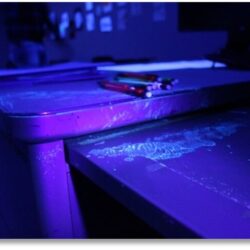
Cleaning and Disinfecting Efficiency Study
Using fluorescent dye and ATP bioluminescence, RHP evaluated the effectiveness of different cleaning procedures following simulated contamination events.
Read the Case Study →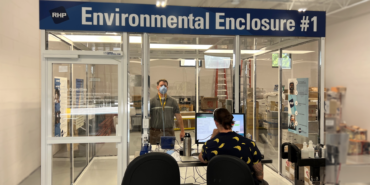
Respirator Fit Capability Testing (ASTM F3407-21)
RHP’s ESL performed fit-capability testing for negative-pressure half-facepiece particulate respirators under ASTM F3407-20/21 standards.
Read the Case Study →Recent News & Insights
RHP Experts to Explore Exposure, Hazard and Global Regulation of Mineral Active Ingredients at the 2026 PCPC Symposium
RHP scientists will present on exposure and hazard considerations for mineral active ingredients at the Personal Care Products Council’s 2026 symposium.
Read more →RHP’s Frank Pagone to Join PFAS Panel at the 2026 National FETTI Conference
Dr. Frank Pagone joins a multidisciplinary panel exploring emerging PFAS exposure pathways, testing, and risk at the 2026 National FETTI Conference.
Read more →Read-Across Is No Longer Optional: Why It Is Becoming Central to Modern Chemical Safety Assessment
Read-across is evolving from a data-gap-filling exercise into a foundational framework integrating exposure science, toxicokinetics, and New Approach Methodologies.
Read more →What EPA’s New Biosolids Guidance Means for PFOA and PFOS Risk
EPA’s proposed guidance offers voluntary recommendations for mitigating PFOA and PFOS risks from biosolids — RHP breaks down what it means for exposure evaluation.
Read more →Talk to an Exposure Scientist
Have a question about laboratory testing, exposure reconstruction, or risk interpretation? Reach out below.