
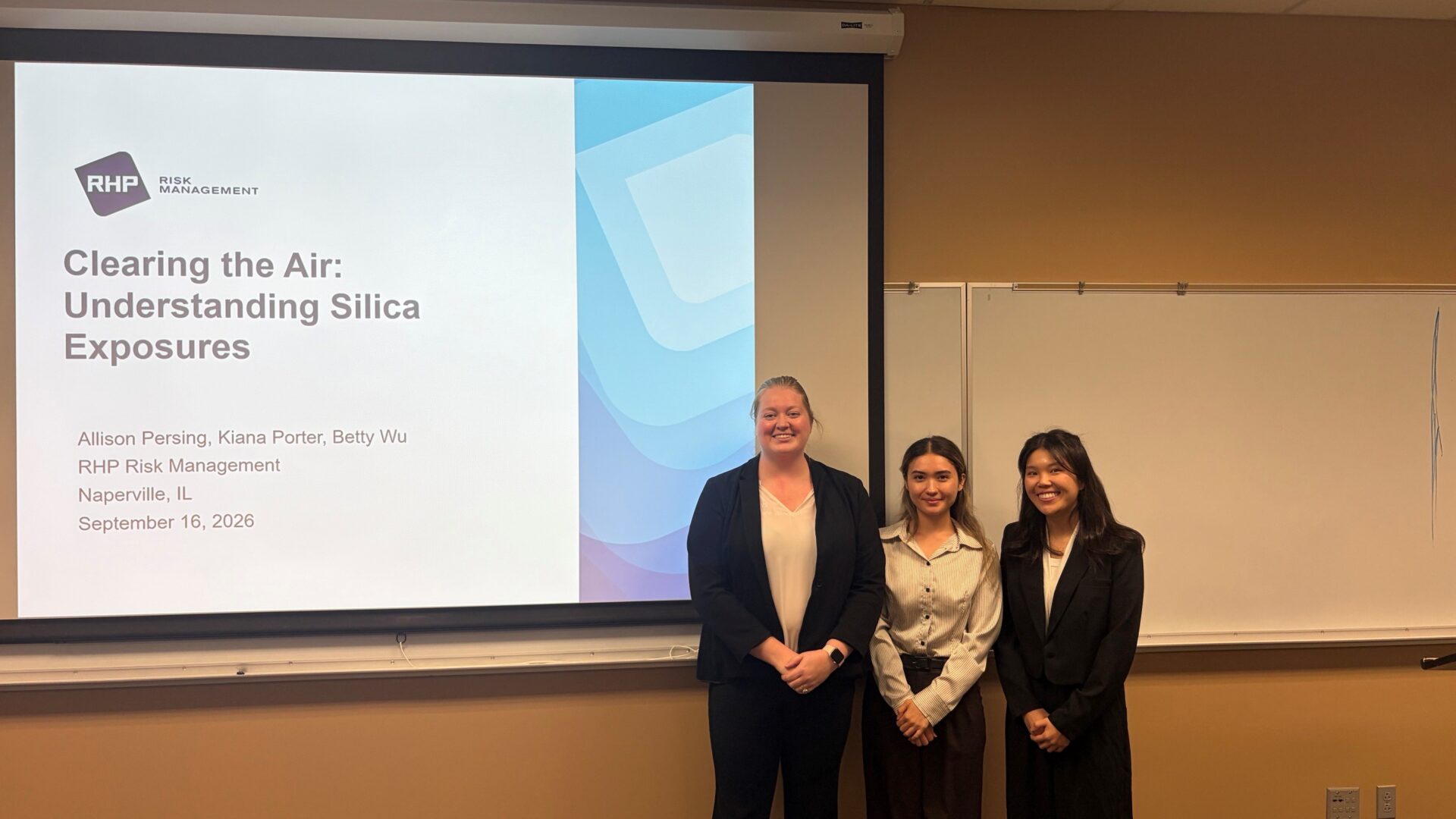
On September 16, 2026, RHP Risk Management’s Allison Persing, MS, CIH, CSP, Kiana Porter, MPH, and Betty Wu, MHS presented Clearing the Air: Understanding Silica Exposures at the 2026 Chicagoland Safety, Health & Environmental Conference in Naperville, Illinois. The session connected the health science and regulatory framework for respirable crystalline silica with the practical decisions employers must make when evaluating exposure and controlling dust-generating work.
Respirable crystalline silica is a very fine dust made of microscopic particles of silica (silicon dioxide) that are small enough to become airborne when workers cut, grind, drill, polish, crush, sweep, or otherwise disturb silica-containing materials such as concrete, mortar, brick, foundry products, natural stone, and engineered stone. Repeated or intense exposure to respirable crystalline silica is associated with silicosis and other health effects such as lung cancer, chronic obstructive pulmonary disease, kidney disease, and certain autoimmune effects. A product’s silica content alone does not determine exposure risk. The task performed, tools used, energy applied to the material, duration of work, ventilation, water delivery, housekeeping practices, and workers’ proximity to dust-generating activities all influence exposure to respirable crystalline silica.
A key takeaway from the presentation was that an effective silica exposure control program should not rely on safety data sheets, a single air sample, or respiratory protection alone. Every worksite is different, and factors such as facility size and layout, workforce, production volume, materials, tasks, equipment, and work practices can influence how silica exposures are generated and controlled. As a result, there is no one-size-fits-all exposure control program. Employers must understand how materials and tasks can create exposure, use representative exposure data to characterize risk, apply appropriate controls, and verify that those controls continue to perform under actual working conditions.
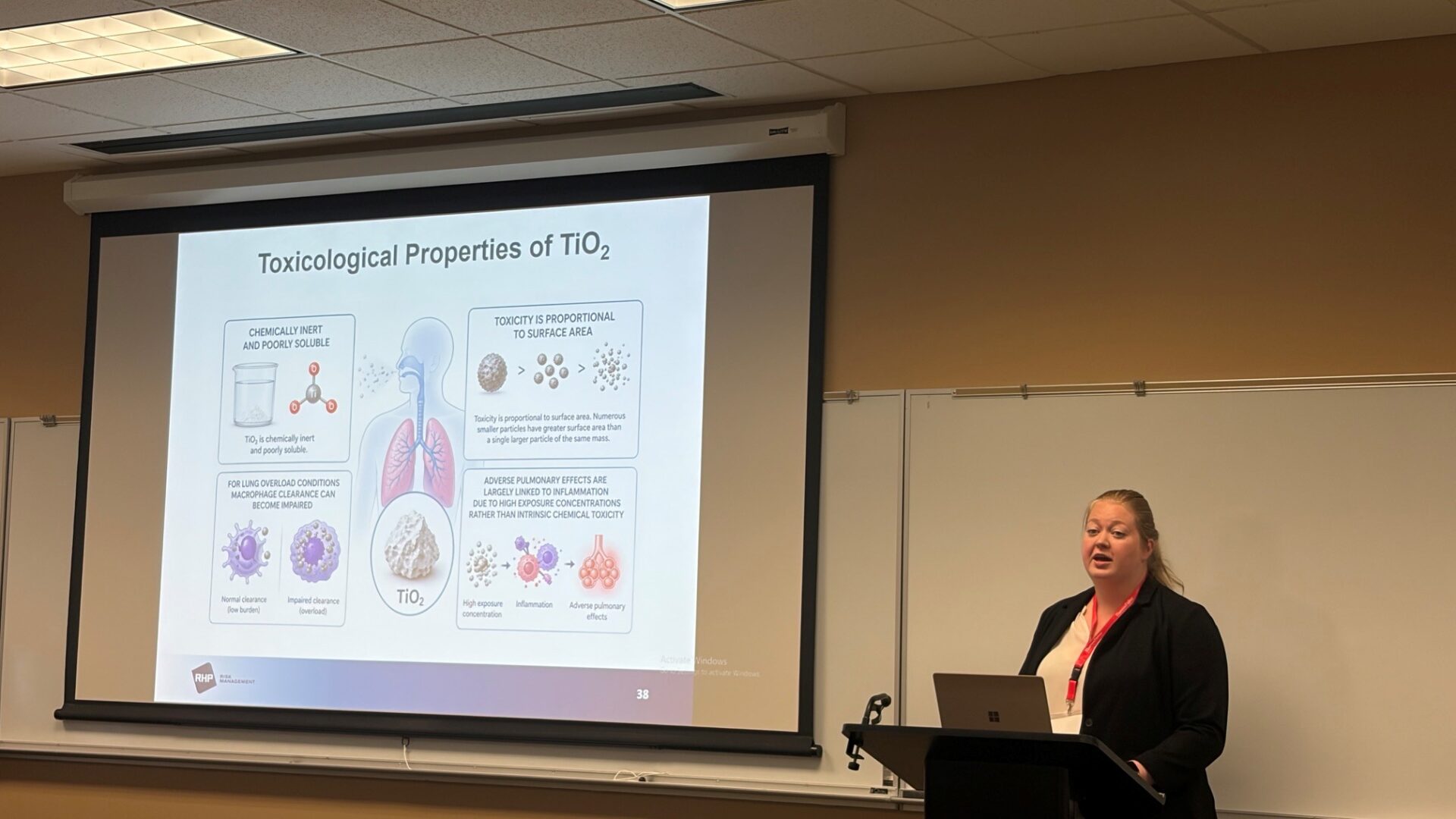
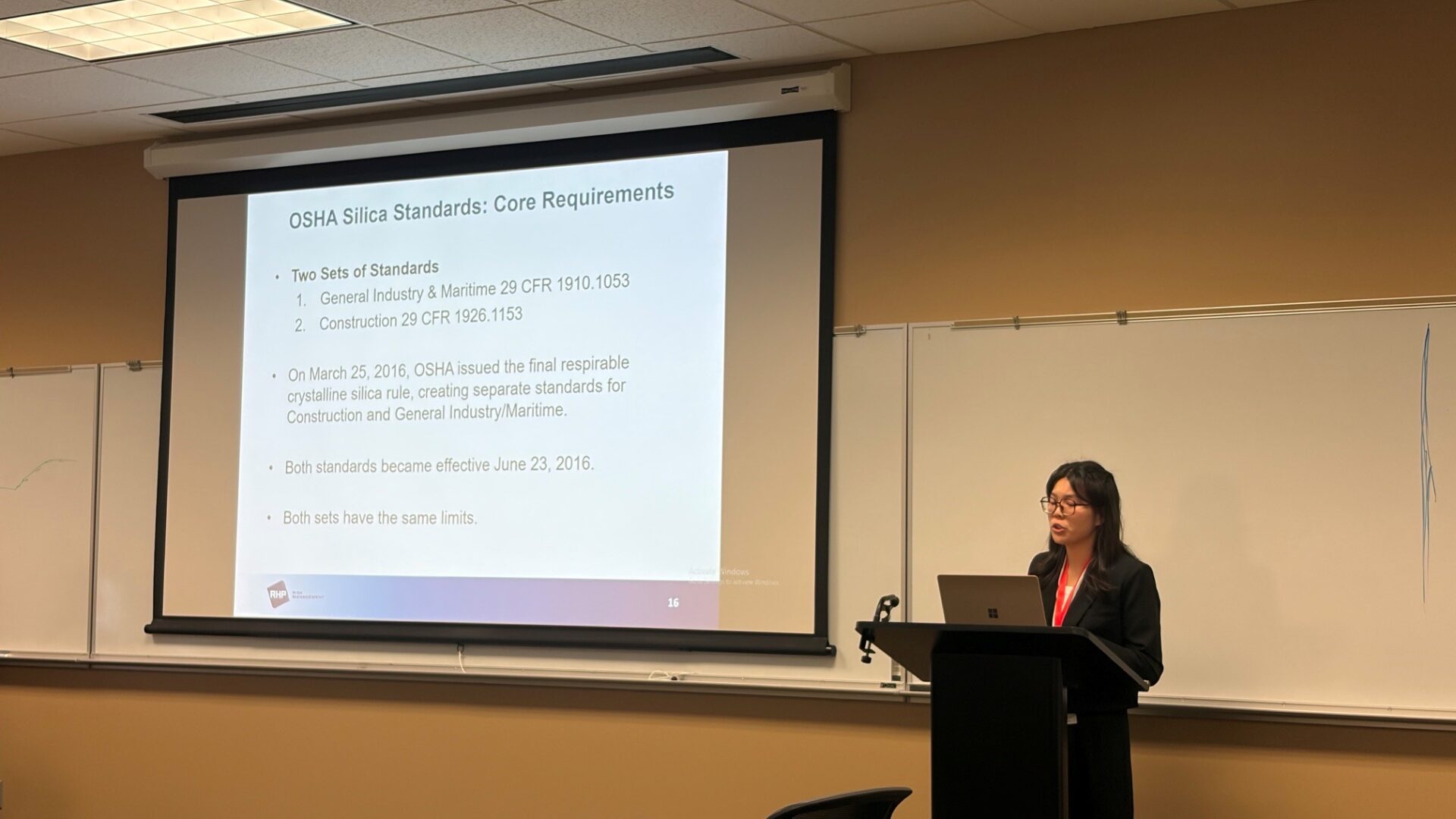
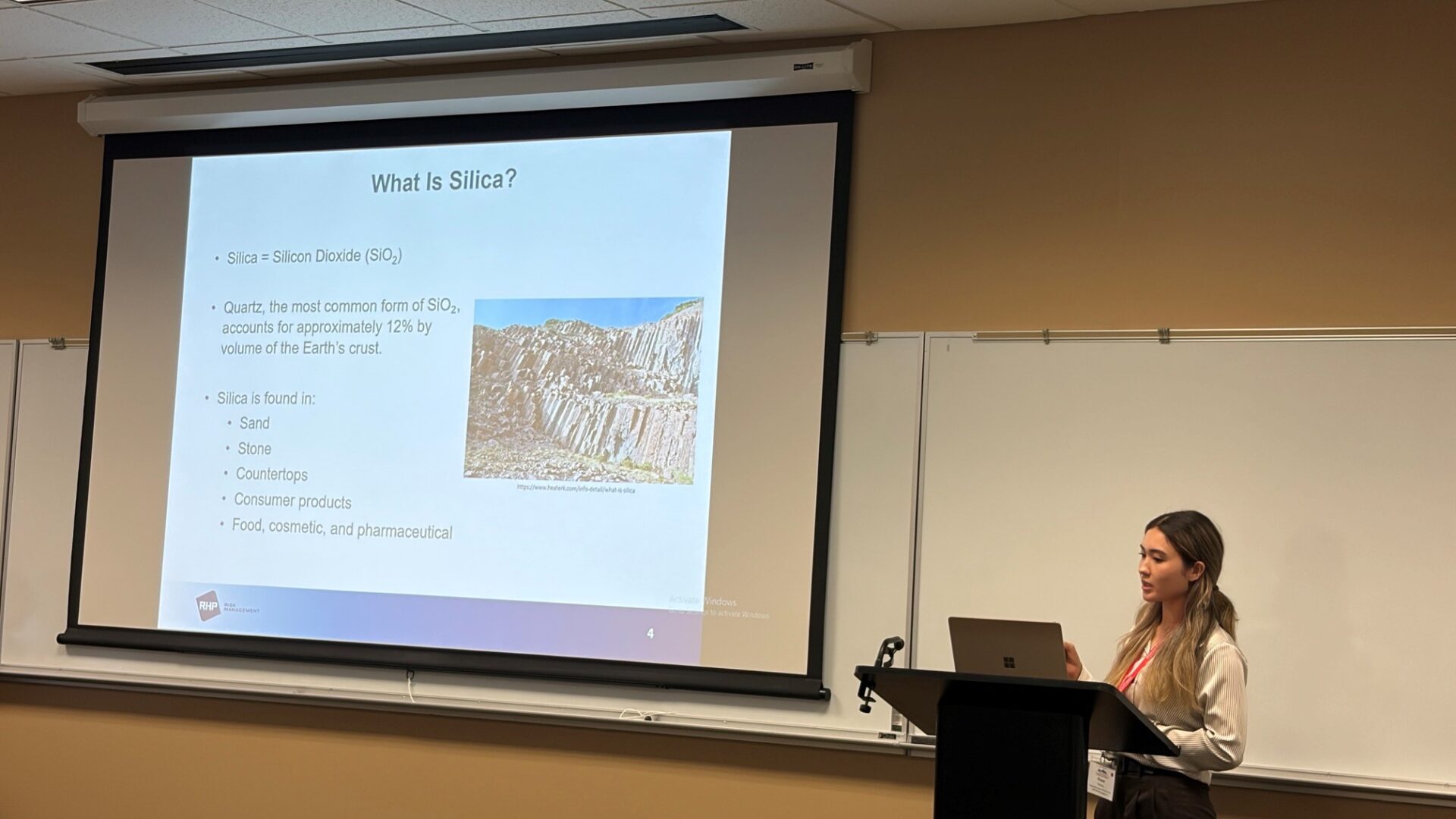
Controls Must Be Layered and Verified
The presentation discussed the hierarchy of controls as a framework for evaluating and managing silica exposure. Effective exposure control requires employers to evaluate the specific materials, tasks, equipment, and work conditions at their facility and select an appropriate combination of controls. Engineering controls such as wet methods, local exhaust ventilation, tool-integrated capture, process enclosure, and isolation can play an important role in reducing airborne silica exposures. Regardless of the materials being used, employers should evaluate the hazards associated with their processes and develop, implement, and periodically verify a comprehensive health and safety program appropriate for their operations.
Practical Takeaways for Employers
- Map materials and tasks: Identify silica-containing products, the activities that disturb them, affected employees, bystanders, maintenance work, and cleanup activities.
- Use representative exposure data: Develop a sampling plan that captures the workers, tasks, shifts, and conditions most likely to produce meaningful or higher exposures.
- Evaluate controls under actual conditions: Observe how wet methods, ventilation, tools, enclosures, housekeeping, and work practices function during normal production and non-routine work.
- Integrate respiratory protection: Confirm that respirator selection and assigned protection factors are supported by exposure data and that the full OSHA respiratory protection program is implemented.
- Document and revisit the program: Maintain a written exposure control plan, training and sampling records, and a process for reassessment when materials, equipment, production, or work practices change.
How RHP Supports Silica Risk Management
RHP Risk Management’s Certified Industrial Hygienists, exposure scientists, and safety professionals help employers move from regulatory requirements to practical, defensible workplace decisions. RHP’s silica risk-management support includes:
- Workplace reviews and task-based silica hazard evaluations
- Personal breathing-zone air monitoring and exposure assessment strategies
- Evaluation of engineering controls, work practices, housekeeping, and personal protective equipment
- Written exposure control plans and silica program development or review
- Respiratory protection program support, respirator selection, fit testing, and training
- Employee and supervisor training
- Interpretation of industrial hygiene data and recommendations for follow-up monitoring
- OSHA and Cal/OSHA compliance support, program audits, and technical assistance following inspections or citations
If your organization needs to assess worker exposure, validate controls, prepare for regulatory changes, or strengthen its silica program, contact RHP Risk Management at (866) 481-8188 to set up an initial consultation and learn more about RHP’s silica consulting services.