
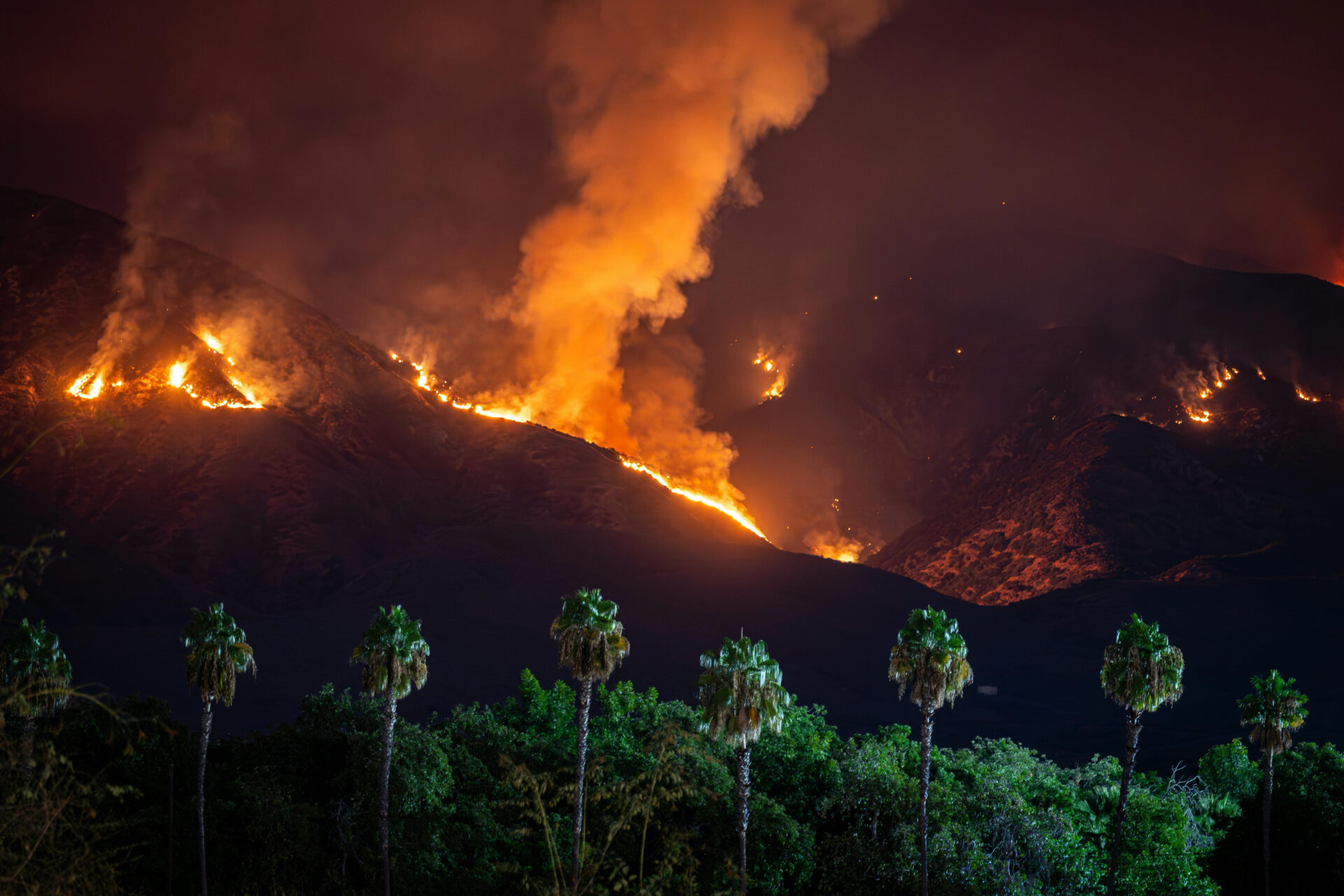
 In Southern California, early April marked the start of wildfire season with two significant blazes: the Springs Fire in Riverside County and the smaller but still destructive Crown Fire in Los Angeles County. Both fires ignited under warm, dry conditions and spread quickly, fueled by dry vegetation and strong Santa Ana winds.
Despite the risks they initially posed, coordinated response efforts from aerial and ground crews brought both fires under control quickly, with minimal reported damage.
In response to these fires, Cal/OSHA advised employers to take precautions to protect workers from wildfire smoke exposure, as the fires affected air quality across Riverside and Los Angeles counties, with smoke posing potential health risks to workers in the area. Cal/OSHA’s wildfire smoke regulations (Title 8, Section 5141.1) are intended to protect workers, particularly those in outdoor or non-enclosed work environments, who may be exposed to unhealthy air conditions caused by wildfire smoke. Wildfire smoke is a complex mixture of water vapor, gases, volatile organic compounds (VOCs), hazardous air pollutants, and particulate matter (PM). Particulate matter is defined by the size of the particle, where PM2.5 are particles that are less than or equal to 2.5 microns in diameter. PM2.5 poses a health risk because small particles can travel deep into the lungs and enter the bloodstream, potentially causing systemic inflammation.
Cal/OSHA’s wildfire smoke protection regulations apply when air quality reaches unhealthy levels, specifically, when the Air Quality Index (AQI) for fine particulate matter (PM2.5) is 151 or higher, and when it is reasonably foreseeable that employees could be exposed to wildfire smoke as part of their work. The regulations require employers to monitor air quality, communicate hazards to workers, and take protective measures, including modifying work practices and providing respiratory protection when smoke reaches certain levels. The regulations focus on reducing exposure to harmful particulate matter and ensuring that employers are prepared to respond when wildfire smoke creates occupational health risks.
Air Quality Index is a method used by the US EPA to report air quality on a real-time basis. Employers can use AQI or their own direct reading instruments to estimate employee exposure. Air quality can be tracked through US EPAs AirNow or local air quality management district websites. When using direct reading instruments, employers should use resources provided by entities such as the State of California Department of Industrial Relation’s Air Quality Index to ensure concentrations are converted appropriately.
Where the AQI for PM2.5 is 151 to 500, the employer must provide and encourage the use of respirators, and where the AQI for PM2.5 exceeds 500, employers must provide and require respirator use.
Certain employers are exempt from Cal/OSHA’s wildfire smoke protection requirements and exemptions generally apply to work environments where employees are not meaningfully exposed to outdoor air or elevated smoke levels. For example, the regulations do not apply to employees working in enclosed buildings, structures with filtered mechanical ventilation, or in enclosed vehicles equipped with cabin air filters. Employers are also exempt if they can demonstrate that PM2.5 levels at the worksite remain below the threshold corresponding to an AQI of 151. Further, the regulations do not apply to employees exposed to an AQI of 151 or higher for one hour or less during a shift, or to firefighters actively engaged in wildland firefighting.
As wildfire activity continues throughout the summer and beyond, employers must remain vigilant in protecting workers from the health risks associated with smoke exposure. Cal/OSHA’s wildfire smoke regulation provides a framework for monitoring air quality, communicating hazards, and implementing protective measures as conditions change. By understanding when the rule applies and taking proactive steps to reduce exposure to particulate matter, employers can better protect employee health and maintain compliance. Prioritizing worker protection during wildfire events is a critical component of workplace safety in California’s evolving environmental landscape.
Contact RHP Risk Management professionals who have decades of experience reviewing and understanding OSHA regulations, and helping clients bring their businesses into compliance through our comprehensive OSHA site audits to identify compliance gasp and provide effective solutions. Additionally, RHP professionals provide follow on support after an event or OSHA complaint, inspection, or violation to help respond and mitigate your business and financial risks.