
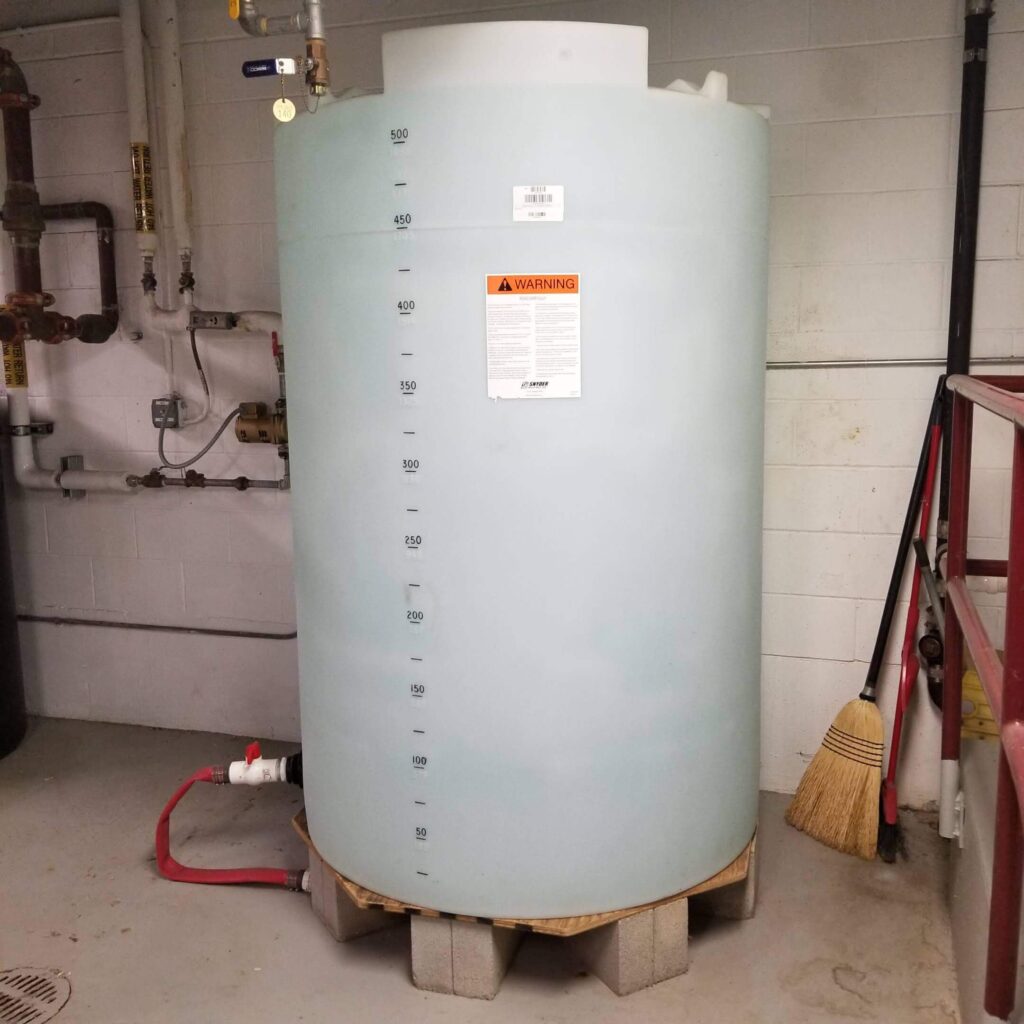
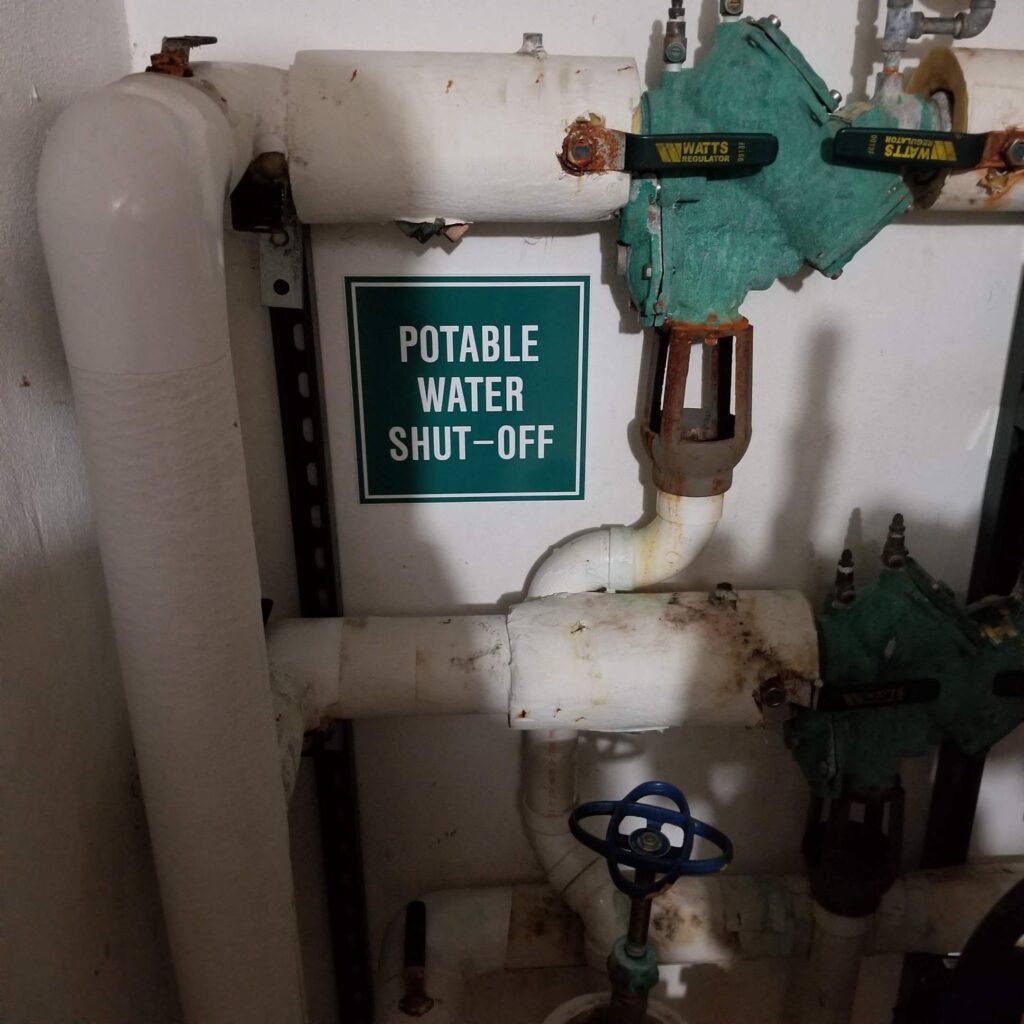
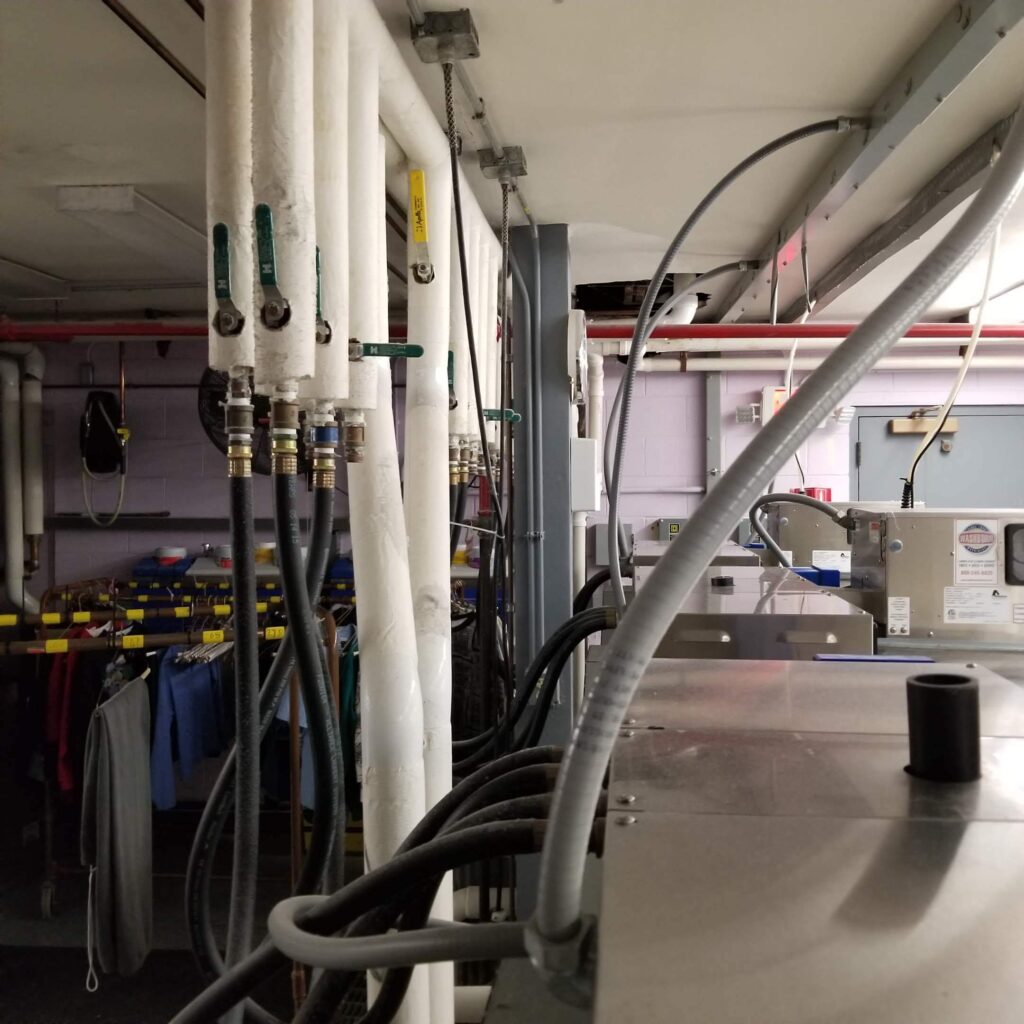
RHP Risk Management developed a site-specific water management plan (WMP) to reduce the growth and spread of building related legionella & other waterborne opportunistic pathogens for a healthcare facility following the best practice guidance presented in ASHRAE Standard 188, as referenced by guidance provided by the CDC and CMS. Following the implementation of the site specific WMP, RHP conducted sampling throughout the facility for legionella to validate the current WMP.
- RHP met with healthcare management and engineering staff to review the required elements of the water management program, identified individuals to be included on the water management team, and defined roles for those individuals.
- RHP conducted a site walkthrough with facilities maintenance staff and building engineers to identify risk factors, map the flow of water through the buildings, identify control measures and points of use, and develop a water flow diagram.
- RHP collected samples from numerous water sources including cooling towers, ice machines, decorative fountains, sinks, showers, hot water storage tanks, central domestic cold water fixtures, central domestic hot water loops.
- RHP analyzed and reported final results to client. Made recommendations and continued to assist throughout the mitigation process.
Risk Management conducted lead in drinking water testing at a community center following the state of Illinois’ sampling protocol for drinking water in schools. RHP also provided recommendations to help the facility meet public health requirements under 40 CFR §141.80–§141.90 of the Safe Drinking Water Act.
- RHP collected water samples from nine individual water sources within the facility. The samples were analyzed by a laboratory accredited under the National Lead Laboratory Accreditation Program (NLLAP).
- During RHP’s initial sampling event, lead was detected in 3 of 9 fixtures. Lead concentrations were measured at up to more than six times the U.S. EPA Lead and Copper Rule action level.
- RHP supported the facility’s mitigation plan by providing recommendations aligned with U.S. EPA and state department of public health guidelines. Recommended actions included short-term controls, such as the installation of point-of-use water filters, and long-term controls, such as the replacement of affected outlets or service lines.
- After mitigation strategies were implemented, RHP field staff conducted follow-up testing and confirmed that all sampled fixtures had lead concentrations below the laboratory level of detection, ensuring compliance with applicable federal and state drinking water requirements.