
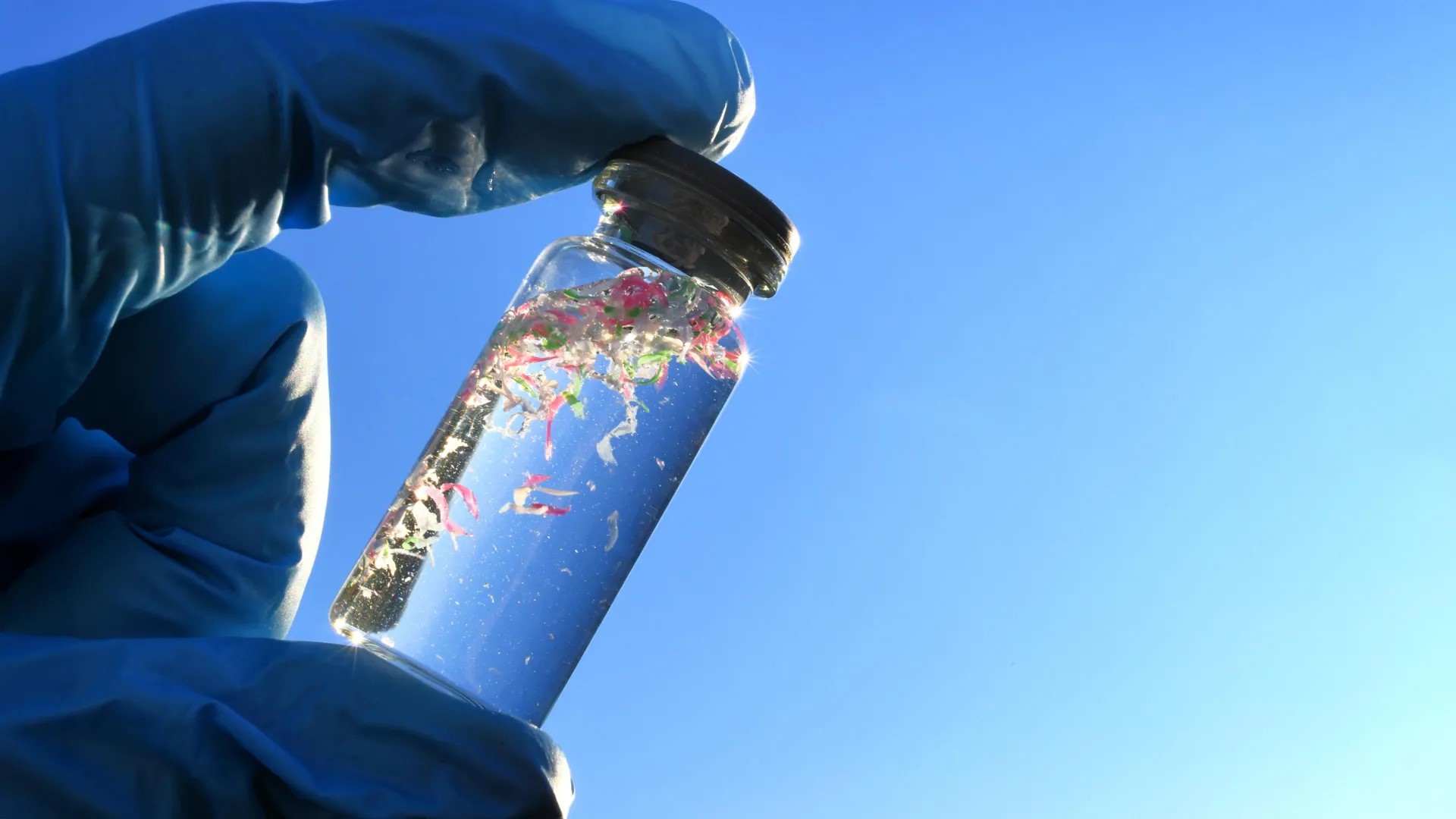
Microplastics are quickly becoming one of the most closely watched environmental and public health topics worldwide, drawing increasing attention as researchers study their presence in air, water, food, and consumer products.
Unanswered questions remain about the extent of human exposure and the potential long-term health effects associated with microplastics and as interest from both regulators and the scientific community grows, federal agencies are investing in studies to better understand how microplastics interact with the human body and identify ways to reduce potential health risks. To help address data gaps that currently exist in our understanding of microplastics, the U.S. Department of Health and Human Services (HHS), through ARPA-H, has launched a $144 million initiative: STOMP (Systematic Targeting of MicroPlastics).
What is STOMP?
STOMP is a nationwide research initiative focused on developing practical tools to measure, study, and ultimately remove microplastics and nanoplastics from the human body. The program is centered on three primary objectives: improving the detection and quantification of microplastics in human tissues, understanding which types of plastics present the greatest health concerns and how they move through the body, and developing safe, effective methods to remove these particles from the body. To support these goals, STOMP will establish standardized, clinical-grade approaches for microplastics analysis and exposure assessment.
STOMP is organized into two key phases. The first phase will focus on developing laboratory techniques capable of accurately detecting and characterizing nano-sized microplastic particles, even within complex biological tissues. This first phase will also involve imaging and analyzing microplastics in animal organs and cells to better understand how these particles move through the body and contribute to toxicity. In the second phase, STOMP will translate these measurement capabilities into cost-effective, scalable tools that can be used in clinical settings to assess an individual’s microplastic exposure. ARPA-H projects STOMP performers will begin work in late Fall 2026 and the first two phases to span approximately 24 months. Though no official date has been released to start or conclude the project, after the conclusion of the first 24-month phase of the program, STOMP will also aim to develop practical solutions for safely removing microplastics from the human body in a proposed third phase.
RHP Risk Management’s Microplastics Services
For organizations, microplastics introduce a new category of emerging risk that spans environmental exposure, employee health, regulatory compliance, and long-term liability. RHP Risk Management helps clients evaluate microplastics using a science-based framework that integrates occurrence testing, particle characterization, chemical analysis, exposure reconstruction, deposition modeling, and human health risk assessment. This work spans multiple questions of concern, including microplastics in drinking water, inhalation of airborne fibrous particles, particle size- and shape-dependent deposition, and the potential for chemical additive leaching from polymers such as polyvinyl chloride (PVC) and polyethylene (PE).
Contact RHP experts to reduce uncertainty and enable confidence in decision-making by delivering reliable, reproducible, and relevant data. Through early and active stakeholder engagement, we provide customized solutions that support clients with their specific goals.