
Industrial Hygiene | Occupational Health Update
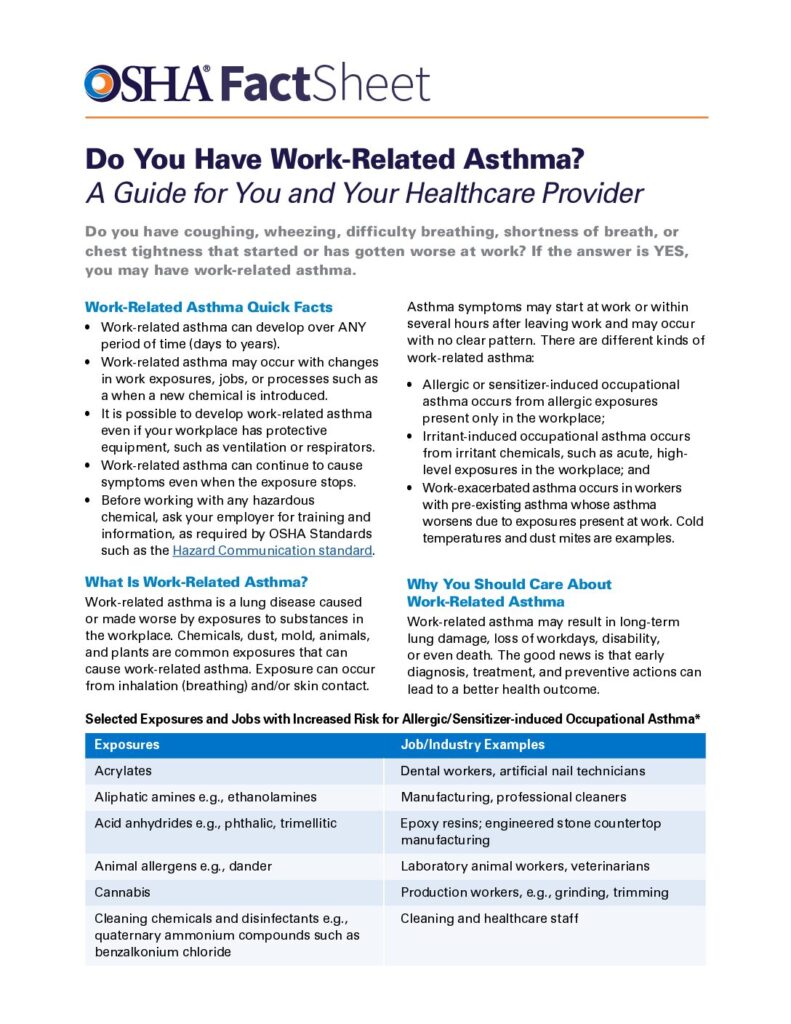
OSHA recently published an updated fact sheet, “Do You Have Work-Related Asthma? A Guide for You and Your Healthcare Provider,” highlighting workplace exposures and occupations associated with an increased risk of work-related asthma.
The fact sheet is an important reminder for employers that respiratory health concerns may be linked to chemicals, dusts and other substances encountered during normal work activities. OSHA notes that work-related asthma can develop over days or years and may appear after a new chemical or process is introduced even when ventilation or respiratory protection is already in place.
For employers, the key takeaway is clear: protecting worker health requires understanding the nature and extent of workplace exposures and evaluating whether existing controls are effectively minimizing potential risks.
What Exposures Does OSHA Identify?
OSHA defines work-related asthma as asthma caused or made worse by workplace exposures. Potential causes can include chemicals, dust, mold, animals and plants, with exposure occurring through inhalation or skin contact. Examples of these include:
- Acrylates among dental workers and artificial nail technicians
- Aliphatic amines in manufacturing and professional cleaning
- Acid anhydrides associated with epoxy resins and engineered stone manufacturing
- Cannabis during production activities such as grinding and trimming
- Cleaning chemicals and disinfectants used by cleaning and healthcare staff
- Diisocyanates associated with spray painting, polyurethane foam, adhesives and construction
- Formaldehyde in healthcare, hairdressing and particle board manufacturing
- Metals such as chromium and nickel in metal plating and other industrial operations
- Wood dust among woodworkers, forestry workers and sawmill employees
OSHA also identifies glutaraldehyde, enzymes, grains and flours, latex, persulfate salts and other potential sensitizers, while noting that the list is not exhaustive. These examples span manufacturing, healthcare, construction, laboratories, food processing, personal care and other industries, illustrating why respiratory exposure concerns are not limited to traditionally high-hazard workplaces.
Exposure Assessment Is an Important First Step
When a workplace uses chemicals or generates airborne dusts, fumes or vapors, employers need reliable information about potential employee exposure.
An industrial hygiene exposure assessment can begin with a review of work processes, Safety Data Sheets, chemical inventories, employee tasks and existing controls. Depending on the hazard, personal breathing-zone and area air sampling can then be used to characterize employee exposures and compare results with applicable OSHA Permissible Exposure Limits and other occupational exposure guidelines.
RHP Risk Management’s Industrial Hygiene services include workplace exposure assessments, air monitoring, ventilation evaluations, PPE assessments and recommendations for engineering, administrative and work-practice controls. RHP’s Certified Industrial Hygienists work with employers to determine appropriate sampling strategies and evaluate whether existing controls are adequately protecting employees.
Evaluating Controls Beyond Air Sampling
Exposure monitoring is only one part of a comprehensive occupational health program.
When an occupational exposure assessment identifies a respiratory hazard, employers should evaluate the effectiveness of existing protective measures, including ventilation, work practices, employee training, Hazard Communication, PPE and respiratory protection. RHP provides Environmental Health and Safety services that include program development, employee training, occupational exposure assessments and respiratory protection and PPE evaluations.
Where respirators are required, employers must also ensure their respiratory protection programs meet applicable OSHA requirements, including medical evaluations, employee training and fit testing. RHP provides both respiratory protection program support and respirator fit testing services.
Worth Noting
OSHA’s new asthma fact sheet is informational. OSHA states that it does not create new compliance requirements or alter existing obligations. Instead, it provides employers and workers with another resource for recognizing potential workplace respiratory hazards and understanding when further evaluation may be warranted.
How RHP Risk Management Can Help
RHP Risk Management helps employers identify, evaluate and control workplace exposures to chemicals, dusts, fumes, vapors and other occupational hazards. Our Industrial Hygiene and Occupational Health and Safety professionals can assist with exposure assessments, personal and area air monitoring, ventilation evaluations, respiratory protection, PPE assessments, Hazard Communication programs, and development of practical exposure-control strategies.
If your employees work with chemicals or processes that may present respiratory hazards, RHP can help determine whether additional exposure evaluation or controls are appropriate.
Contact RHP Risk Management at (866) 481-8188 to set up an initial consultation and learn more about our Industrial Hygiene and Environmental Health and Safety services.
Primary reference: OSHA Fact Sheet FS-3707 (08/2026), “Do You Have Work-Related Asthma? A Guide for You and Your Healthcare Provider.”