
Protect Your Products. Meet Regulatory Expectations.
Reduce risk across the lifecycle. RHP integrates exposure science, toxicology, and regulatory expertise to evaluate product safety, support compliance, and guide stewardship decisions.
Request a ConsultationKey Takeaways: Product Stewardship Services
RHP’s Risk Sciences Framework
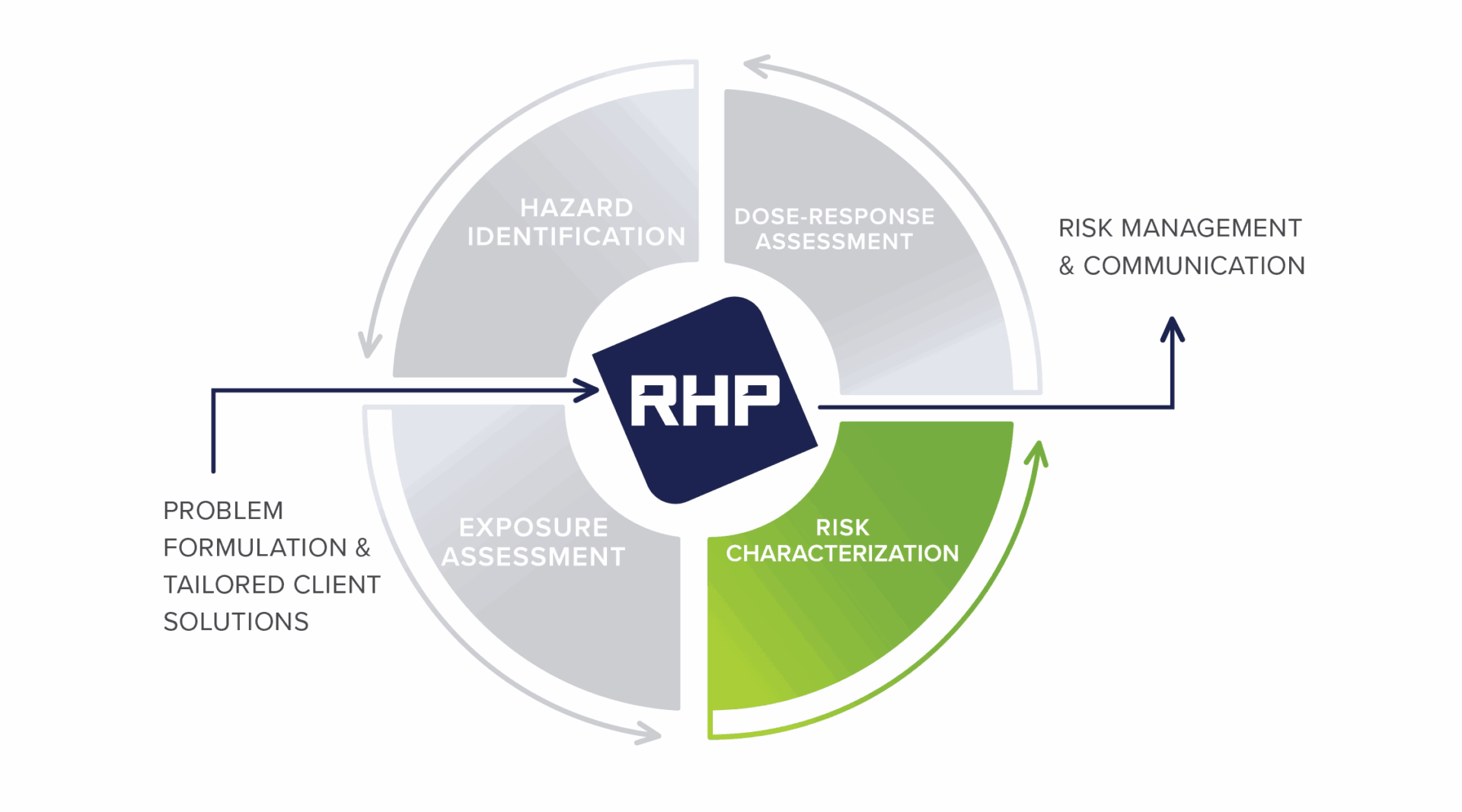
Product Stewardship: Strategic, Integrated, and Defensible
We help clients assess raw materials and finished products, characterize risks, achieve and maintain regulatory compliance, and develop practical solutions that align with regulatory expectations and business objectives. Our science-based approach supports sustainable product development, market readiness, and long-term risk management.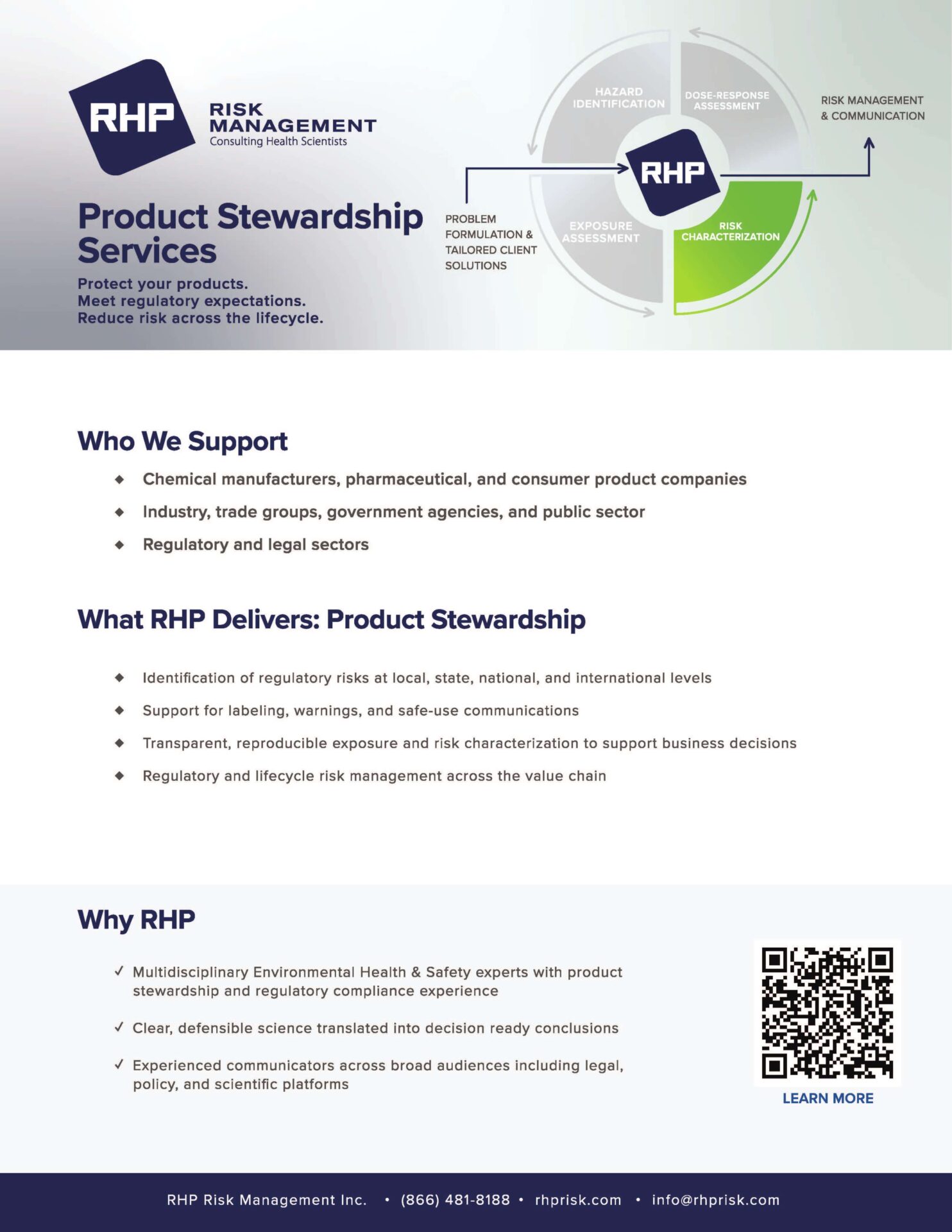
RHP’s Product Stewardship Services (click to download)
What is Product Stewardship?
Product stewardship covers a wide range of activities, from sourcing raw materials, transporting materials and products, production, and assembly, to consumer use considerations and end-of-life considerations. As more products enter the marketplace and their production and manufacturing come under greater scrutiny, product stewardship has become increasingly important.Why Does Product Stewardship Matter?
Chemical regulation is an important component of a holistic product stewardship program. It applies to all companies regardless of industry and covers chemicals used to maintain facilities (for example, housekeeping products, greases and lubricants, and combustibles) as well as raw or composite materials in a final product. Product stewardship programs can clearly detail and manage chemicals throughout the product lifecycle. They give a company transparency into its compliance with chemical regulations and Safety Data Sheet (SDS) requirements, and may strengthen worker safety programs, including appropriate PPE and hazard communication.How RHP Supports Product Safety & Stewardship
What RHP Delivers
- Product safety and chemical risk evaluations grounded in exposure science and toxicology.
- Stewardship strategies that support regulatory compliance and lifecycle management.
- Exposure and risk data to inform formulation decisions and safer alternatives.
- Regulatory support for labeling, documentation, and chemical management requirements.
- Audits and enhancements of existing stewardship systems, and development of new systems.
- Defensible, science-based solutions that support sustainable product stewardship and business objectives.
Experience Across Industries
RHP professionals have decades of experience mitigating risks and managing occupational and environmental hazards in industries including construction, manufacturing, healthcare, food production, automotive, agriculture, cannabis, and personal care products.Who is Affected by Product Stewardship?
Our Related Services
- Environmental Epidemiology
- Environmental Health & Safety
- Exposure Sciences: Product Testing & Exposure Reconstruction
- Exposure Sciences Laboratory Toxicology Services
- Industrial Hygiene Consulting Services
- PFAS Human Health Risk Assessments
- Product Safety
- Proposition 65
- Regulatory Compliance
- Water Management


Recent News & Insights
RHP Risk Management Shares Key Takeaways from the 2026 PCPC Science Symposium & Expo
RHP Risk Management’s Melanie C. Buser and Jacob Persky share key takeaways from the Personal Care Products Council’s 2026 Science Symposium & Expo, including exposure, hazard, and regulatory approaches to mineral active…
Read the article →Methylene Chloride Ruling Highlights Why Chemical Risk Must Be Evaluated in Context
A Fifth Circuit ruling vacating EPA’s 2024 methylene chloride rule underscores a broader principle: identifying a chemical hazard is only the first step. How a chemical is used, who is exposed, and whether controls are effective…
Read the article →Read-Across Is No Longer Optional: Why It Is Becoming Central to Modern Chemical Safety Assessment
Read-across has evolved from a data-gap-filling exercise into the framework that integrates NAMs, exposure science, and toxicokinetics to support modern risk assessment decisions. For years,…
Read the article →What EPA’s New Biosolids Guidance Means for PFOA and PFOS Risk
In July 2026, the U.S. Environmental Protection Agency (EPA) released proposed guidance for reducing potential risks from PFOA and PFOS in biosolids. If finalized, the guidance
Read the article →FDA Adds Bemotrizinol to Sunscreen Monograph
For the first time since the late 1990s, the U.S. Food and Drug Administration (FDA) has added a new active ingredient to the over-the-counter (OTC)
Read the article →Resources & Downloads
Download our service sell sheets, Risk Sciences Framework, and laboratory documents to share with your team.
View ResourcesContact RHP Risk Management
Contact our industry experts and professionals today to learn more about our product stewardship consulting services.