
Testing & Exposure Reconstruction
Product testing and exposure reconstruction built on sound, defensible science from RHP's state-of-the-art Exposure Sciences Laboratory.
Request A Product Exposure Assessment →Exposure Science at a Glance
RHP Risk Management’s exposure science services offer product testing and exposure reconstruction to help businesses understand and manage workplace hazards, ensuring compliance with OSHA’s requirements for hazard assessment (29 CFR 1910.132(d)).
RHP assists clients in understanding exposure and risk by utilizing a state-of-the-art Exposure Sciences Laboratory (ESL) and scientifically accepted methods, which can inform the development of effective control measures to meet OSHA’s Permissible Exposure Limits (PELs) (29 CFR 1910 Subpart Z).
By providing comprehensive exposure assessments, RHP helps businesses prioritize product formulations, redesign processes, and invest in scientific advocacy, ultimately contributing to a safer work environment and reducing the risk of OSHA citations related to chemical exposures.

A2LA Accredited Exposure Sciences Laboratory
RHP's Exposure Sciences Laboratory (ESL) holds A2LA accreditation: independent, third-party verification that our testing methods, equipment, and quality systems meet rigorous international standards (ISO/IEC 17025). That means every exposure study we run is backed by data you can defend in front of regulators, courts, and clients.
RHP's Environmental Enclosure
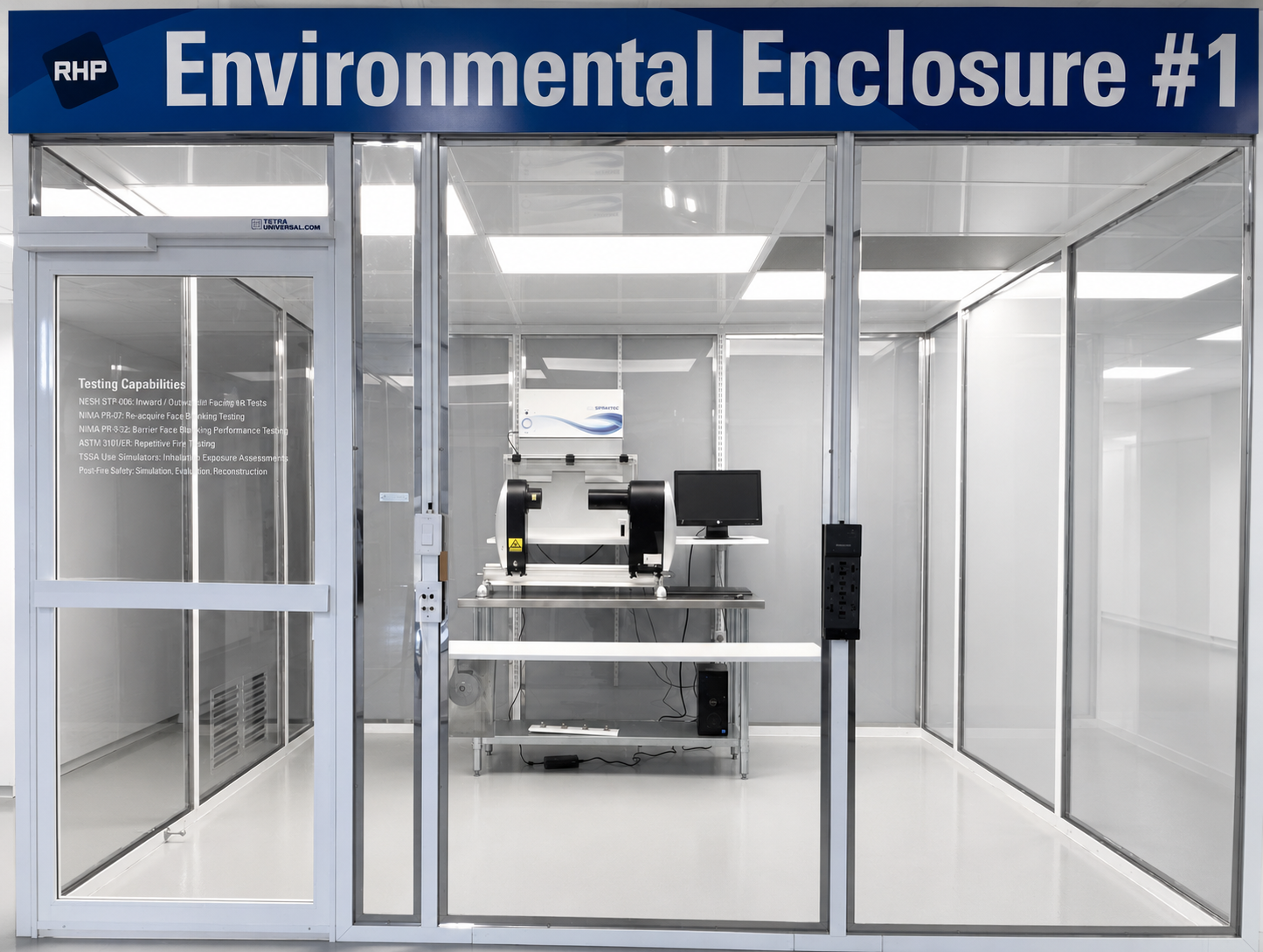
RHP's controlled environmental enclosure supports real-world, as-installed product testing and simulation studies used throughout the exposure assessments below.
How is Exposure Science Testing Conducted?
Using our state-of-the-art Exposure Sciences Laboratory (ESL), RHP Risk Management assists clients in understanding exposure and risk based on sound, defensible, science. RHP’s scientifically accepted and recognized approaches in exposure modeling and quantification, dose response, benchmark dose modeling, and physiologically based pharmacokinetic modeling address questions regarding risk profiles of chemicals, identifying safer and sustainable alternatives, enhancing the understanding of risk that leads to better decision making, and implementing risk management measures to effectively and efficiently reduce exposures for workers and consumers.
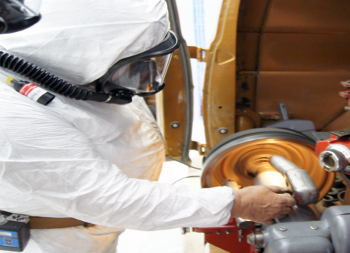
For clients, RHP professionals have extensive experience in resolving uncertainty and improving decision making through development of experimentally derived data, which is relevant, reliable, and reproducible.
RHP collaborates with chemical manufacturers, product manufacturers, and consumer good, pharmaceutical, and legal entities to help gain a better understanding of risk profiles, identify safer and sustainable alternatives, bolster decision making via use of robust scientific methods, and formulate economically and technically feasible risk management measures.
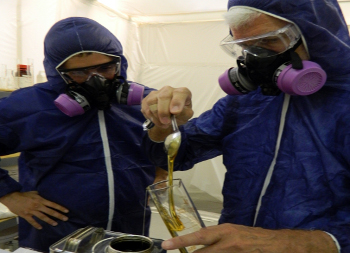
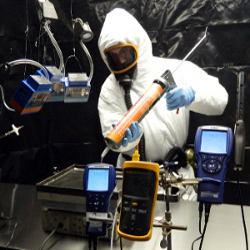
What Are The Current Exposure Science Measurement And Evaluation Practices?
Analytics and Modeling of Human Health Risks from Testing and Sampling
Historical sampling techniques and analytical methods for measuring exposure may differ from modern approaches due to technological advancements as well as changes in anticipated concentrations. To answer modern questions about exposure intensity consistent with historical work activities, RHP expert scientists have designed studies to provide robust data analytics and evaluate correlations between time and task-activity. The analytical results can then be subjected to statistical analysis such as Monte Carlo analysis in preparation for mathematical modeling in order to fill data gaps and inform on the relative risks of historical work techniques.
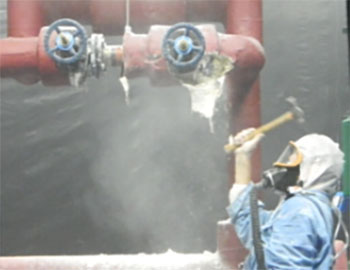
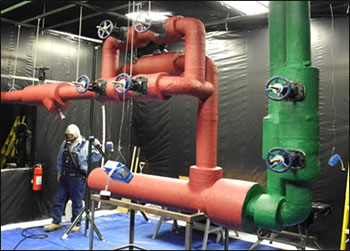
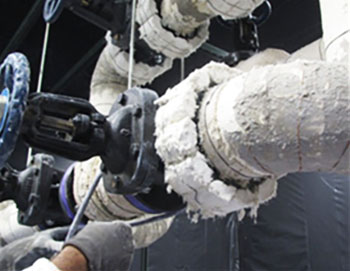

Identification of “Known Unknown” Risks and Management of Existing “Known Known” Risks. “Known unknown” risks are risks that an organization may have awareness that the risk exists but is unaware of the size and effect of the risk. RHP’s exposure modeling and simulated product-use testing helps to fill data gaps and move “known unknown” risks to the category of “known known” risks which may then be managed. To manage known “known known” risks, an organization can ensure that it is ready for an expected impact by applying a risk management methodology, modifying business process workflows, or implementing management change.
Evaluation of Current Product Composition and Use and Compliance with Product Stewardship Regulations
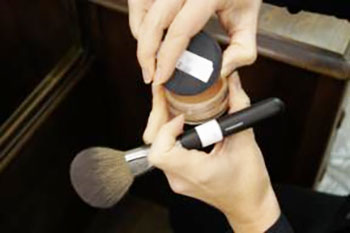
RHP scientists have designed exposure assessment studies to measure airborne contaminant concentrations during application of a variety of consumer products. Because many existing regulatory limits do not apply directly to non-occupational exposures, a risk-based approach considering available toxicological and epidemiological literature can be utilized to evaluate the laboratory analytical results in comparison to the regulatory requirements, such as “no significant risk” at a level of 1 excess cancer in 100,000 individuals exposed over a 70-yr lifetime of product use as required under California Proposition 65, or other similar risk-based criteria.
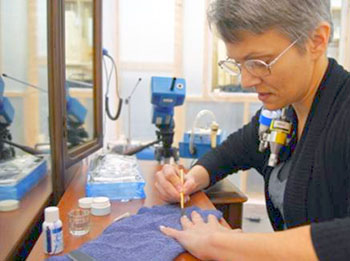
Historical Exposure Dose Reconstruction
Development and Validation of Mathematical Models Which Characterize Human Inhalation or Dermal Exposures
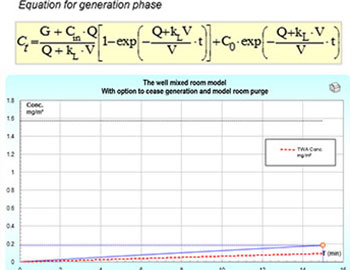
In the absence of information collected at the time of a particular exposure to a chemical or mixture, an exposure reconstruction and the analysis of past exposure and dose can be accomplished through the application of mathematical models. Mathematical models refer to a description of the quantitative relationship between the amount of chemical emitted from a source, over a specific period of time, to the concentration of that chemical in the media of human exposure.
Simulation of Historic Product Use and Extrapolation of Measurements in Scenarios Not Readily Measurable
Historical product formulations may have included ingredients which were subsequently determined to present a potential health concern. The exposure intensity to ingredients-of-concern during use of such products may be poorly understood or undocumented in the published literature.
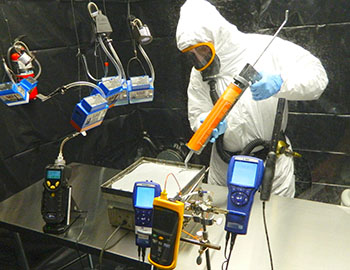
RHP scientists have experience in designing and conducting exposure simulation studies to measure the intensity of exposure for ingredients-of-concern and inform the time-and-motion for tasks and activities during use of these products. Using historical manufacturer formula cards or laboratory scale batches of materials, products can be remanufactured and subsequently utilized in an exposure simulation study designed to fill data gaps.
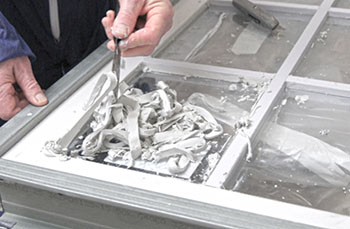
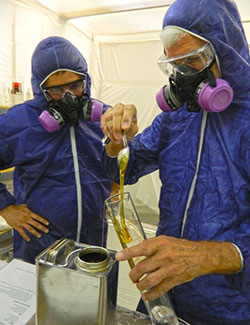
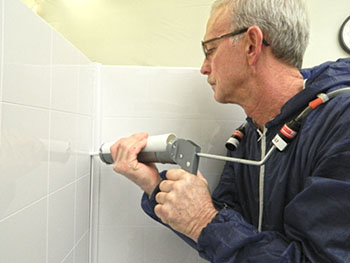
Additionally, RHP can assist clients with evaluating historical workplace, personnel, and regulatory agency records, forensic reconstruction, exposure research, review of historical and current literature and regulations, data mining, big data analysis, statistical analysis, and development of exposure categories and job hazard matrices.
Respirator Fit Capability Testing: ASTM Standard 3407-20, ASTM Standard F3407-21 & ASTM Standard F3502-21
RHP offers performance testing for Respirators and Face Masks to regulatory standards under ASTM Standard F3407-20, ASTM Standard F3407-21 and ASTM Standard F3502-21. These standards can be used by respiratory device manufacturers to design, develop, and produce better fitting respirators and face masks for general public use.
Exposure sciences services offer product testing and exposure reconstruction to help businesses understand and manage workplace hazards. These services utilize a state-of-the-art Exposure Sciences Laboratory (ESL) and scientifically accepted methods to ensure compliance with OSHA’s requirements for hazard assessment under 29 CFR 1910.132(d).
Exposure sciences services help businesses comply with OSHA’s Permissible Exposure Limits (PELs) outlined in 29 CFR 1910 Subpart Z. By providing comprehensive exposure assessments, these services assist in understanding workplace exposure and risk, which helps prevent OSHA citations related to chemical exposures.
Exposure sciences services assist clients in understanding exposure and risk through scientifically accepted methods and state-of-the-art laboratory testing. This information informs the development of effective control measures to help businesses manage and reduce workplace hazards and meet OSHA’s Permissible Exposure Limits.
Exposure sciences services help businesses prioritize product formulations and redesign processes by providing comprehensive exposure assessments. These assessments enable companies to develop safer products while supporting scientific advocacy and reducing the risk of OSHA citations related to chemical exposures.
Exposure Science in Practice

Conventional vs. New Technologies for Validating Engineering Controls
RHP investigated whether needlepoint bi-polar ionization (NPBI) air purifier claims translate to real-world, as-installed performance in occupied buildings.
Read the Case Study →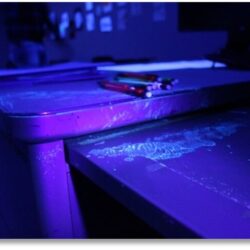
Cleaning and Disinfecting Efficiency Study
Using fluorescent dye and ATP bioluminescence, RHP evaluated the effectiveness of different cleaning procedures following simulated contamination events.
Read the Case Study →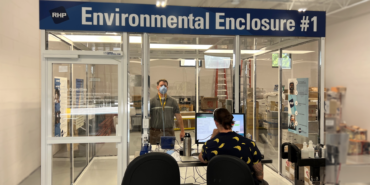
Respirator Fit Capability Testing (ASTM F3407-21)
RHP’s ESL performed fit-capability testing for negative-pressure half-facepiece particulate respirators under ASTM F3407-20/21 standards.
Read the Case Study →Recent News & Insights
RHP Risk Management to Present on Silica Exposure at the 2026 Chicagoland Safety, Health & Environmental Conference
RHP will present on silica exposure at the 2026 Chicagoland Safety, Health & Environmental Conference, taking place September 14–16, 2026 in Naperville, Illinois.
Read more →EPA, OSHA, and OMB Urged to Establish Federal Framework for Worker Chemical Safety
A coalition of 75 organizations has urged EPA, OSHA, and OMB to establish a single federal framework for worker chemical safety under TSCA Section 9. RHP examines what effective coordination could look like.
Read more →Cal/OSHA Schedules July 31 Advisory Meeting on Emergency Engineered Stone Silica Regulation
The California Occupational Safety and Health Standards Board met to discuss Petition 609 and proposed revisions to the emergency engineered stone silica regulation.
Read more →Validating OSHA’s Proposed Heat Acclimatization Schedule
RHP Risk Management’s technical analysis of OSHA’s proposed Heat Injury and Illness Prevention Standard and its heat acclimatization requirements.
Read more →Talk to an Exposure Scientist
Have a product, workplace, or historical exposure question? RHP's Exposure Sciences Laboratory can help you build defensible, data-driven answers.
Request A Product Exposure Assessment →