
Tag: TSCA

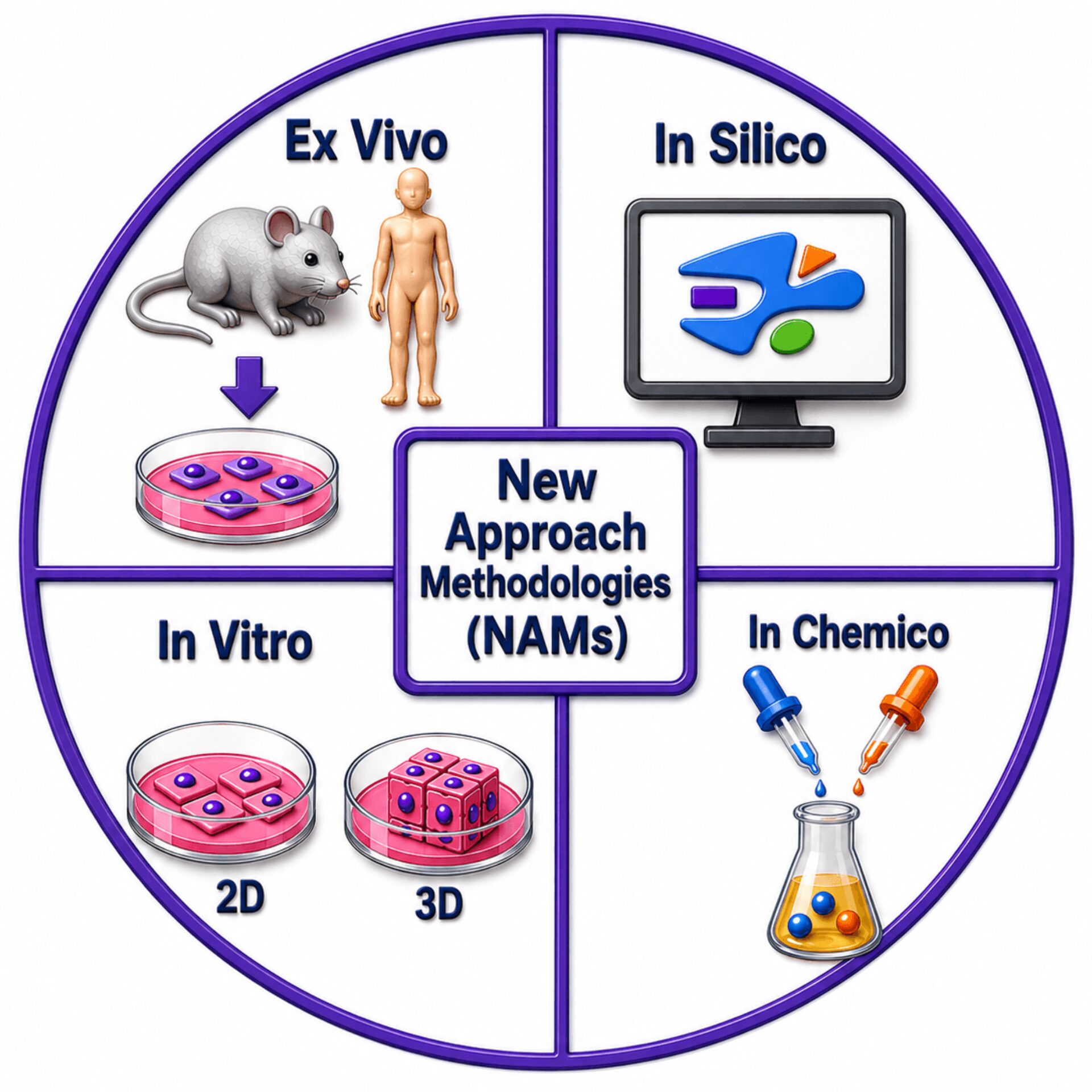
New Approach Methodologies (NAMs) and the Future of Toxicology: Why Industry Should Be Paying Attention

Jon Redmond /June 10, 2026

For decades, toxicology has relied heavily on animal testing to evaluate chemical safety and support regulatory decision-making. In recent years, increasing attention has been given to a broad range of…

RHP Risk Management Presenting at the 2026 Society of Toxicology (SOT) Annual Meeting

Jon Redmond /March 11, 2026

  RHP Risk Management is pleased to announce that members of our Human Health Risk Sciences team, Debra Kaden, PhD, ATS; Ashish Jachak, PhD, MBA; and Melanie Buser, PhD, DABT,…

California Proposition 65 compliance guide graphic featuring OEHHA logo and warning symbol

Vinyl Acetate (VAM) Proposition 65 Compliance: RHP Risk Management derives candidate No Significant Risk Levels (NSRLs) for inhalation and oral exposure

Jon Redmond /February 13, 2026

Vinyl acetate monomer (VAM) is a synthetic chemical building block used in the production of copolymers such as adhesives, sealants, coatings, and surface treatments. The Office of Environmental Health Hazard Assessment (OEHHA)…

Journal cover image for environmental health and safety assessment publication

Particle Deposition of Airborne Microplastic Fibers in the Human Lung: A Modeling Framework Linking Fiber Size, Shape, Orientation, and Polymer Type to Regional Lung Deposition

Jon Redmond /January 9, 2026

Particle Deposition of Airborne Microplastic Fibers in the Human Lung: A modeling framework linking fiber size, shape, orientation, and polymer type to regional lung deposition Journal of Environmental Exposure Assessment…

Journal of Environmental and Environmental Assessment cover featuring exposure science research

Prioritizing Dermal Absorption Models to Improve Chemical Exposure Predictions

Jon Redmond /January 6, 2026

Prioritization scheme for quantitative structure-permeability relationship (QSPR) models to predict dermal absorption of chemicals Journal of Environmental Exposure Assessment (2026) DOI:10.20517/jeea.2025.42 Why Dermal Absorption Matters for Risk Assessment Dermal contact…