

Vinyl acetate (VAM; CAS 108-05-4) is a synthetic chemical compound, produced industrially by reacting ethylene with oxygen and acetic acid in the presence of a catalyst. During production, inhibitors are added to prevent unwanted polymerization.
Once separated and purified, VAM may be shipped for use as a monomer or converted into other materials. It serves as a critical building block in the manufacture of polymers used in adhesives, paints, coatings, packaging materials, and other consumer and industrial products.
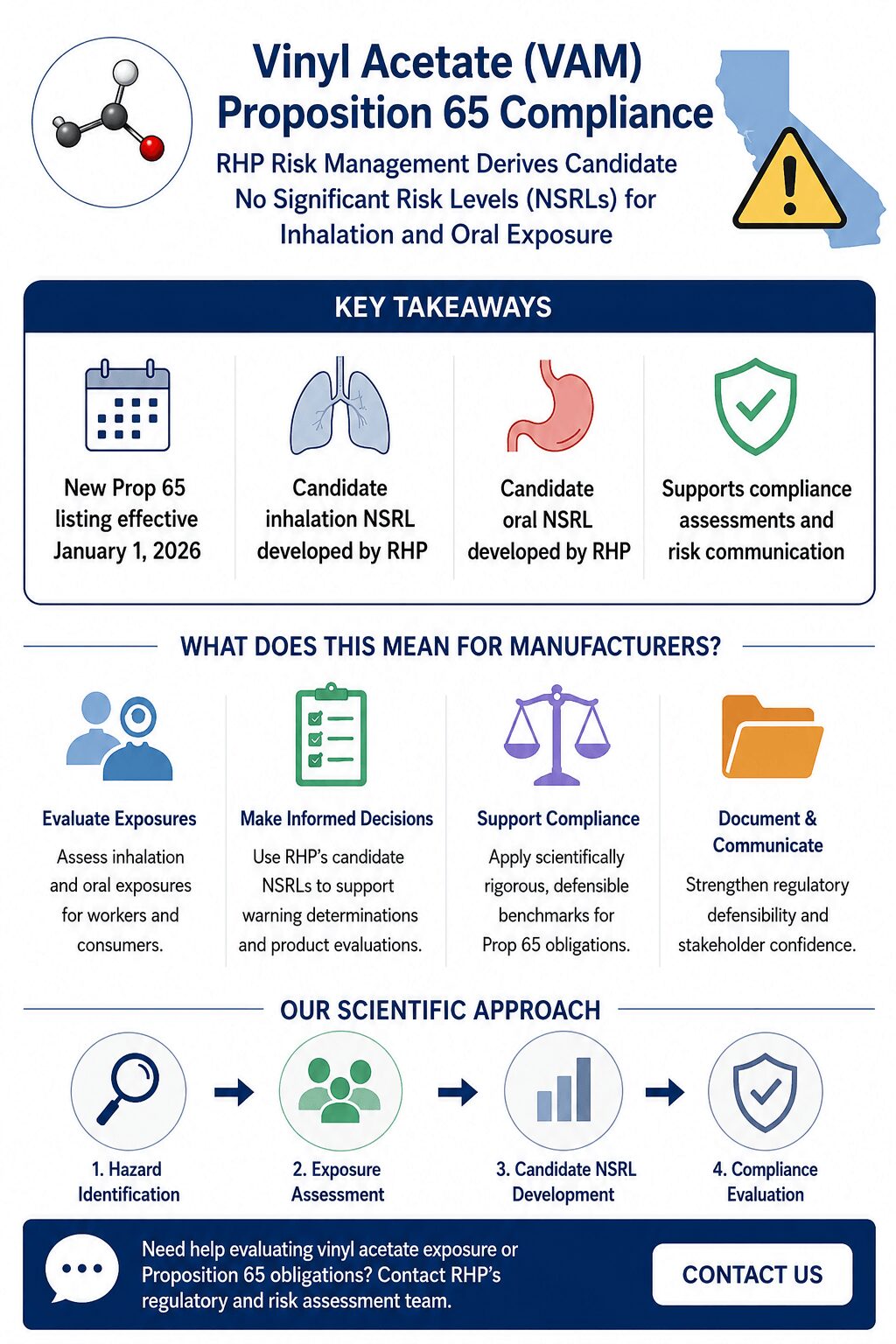
The Office of Environmental Health Hazard Assessment (OEHHA) has identified vinyl acetate as a chemical known to cause cancer under Proposition 65. Effective January 3, 2026, companies selling products containing vinyl acetate in California will be required to provide a Proposition 65 warning label.
Understanding Prop 65
California’s Safe Drinking Water and Toxic Enforcement Act of 1986, commonly known as Proposition 65 (Prop 65), requires businesses to provide clear warnings on substances/chemicals that are known to cause cancer, birth defects, or other reproductive harm. These exposures may occur through consumer products, workplace settings, or environmental releases.
In addition to the warning requirement, Proposition 65 prohibits the knowing discharge of listed chemicals into sources of drinking water. The State of California maintains and updates a list of these chemicals annually – now exceeding 900 substances since its first publication in 1987.
Who Must Comply with Proposition 65?
Prop 65 applies broadly to manufacturers, importers, distributors, and retailers involved in the sale or distribution of products in California.
- Manufacturers typically bear primary responsibility for labeling compliance, but distributors and retailers may also be held liable if warnings are missing or inadequate.
- The law applies to any business with 10 or more employees, including those located outside of California whose products are sold or distributed within the state.
- Government agencies, public water systems, and small businesses (fewer than 10 employees) are generally exempt.
What Compliance to Proposition 65 Involves
Businesses are required to provide a “clear and reasonable” warning when products or operations may result in exposure to a listed chemical above established “safe harbor” levels. Compliance also requires preventing the discharge of significant quantities of listed chemicals into drinking water sources.
How Can My Business Ensure Compliance with Prop 65?
OEHHA’s Prop 65 list is updated annually. To remain compliant with Proposition 65 requirements for vinyl acetate, companies should take proactive steps now. RHP Risk Management’s experts support clients across the full compliance spectrum, including:
- Audit Occupational Exposure Controls: Evaluate workplace exposure data against OSHA Permissible Exposure Limits (PELs), ACGIH Threshold Limit Values (TLVs), and applicable international or local occupational exposure limits (OELs).
- Confirm Proposition 65 Compliance: Review product labeling and warning statements to ensure consistency with current OEHHA requirements and safe-harbor guidance.
- Monitor EPA TSCA and Federal Activity: Stay alert to evolving risk evaluations under the Toxic Substances Control Act (TSCA) and potential prioritization of vinyl acetate or related monomers.
- Review SDSs and Product Labels: Verify alignment with the latest GHS/CLP hazard classifications and ensure global consistency across regulatory regions.
- Update Emergency Response and Reporting Plans: Confirm that spill reporting, emission control, and release management programs align with CERCLA, EPCRA, and state-level requirements.
RHP Risk Management: Your Partner in Proposition 65 Compliance
RHP Risk Management provides specialized guidance to help companies achieve and maintain Proposition 65 compliance. Our multidisciplinary team supports clients through:
- Product formulation and labeling reviews
- Exposure assessment and risk characterization
- SDS and safety communication audits
- Facility and process evaluations for hazardous substance management
Leveraging advanced analytical and exposure simulation capabilities in RHP’s Exposure Sciences Laboratory, our experts model and quantify potential exposures under realistic use conditions. Using a tiered, transparent, and scientifically defensible approach, we deliver reproducible assessments that support both compliance and sustainable product stewardship.
Contact RHP Risk Management by calling (866) 481-8188.
Final Takeaway
Vinyl acetate remains a versatile and widely used industrial chemical, but evolving regulatory requirements demand attention and preparation. Companies that proactively monitor OEHHA updates, occupational exposure standards, and federal or international regulatory actions will be best positioned to maintain compliance, minimize liability, and demonstrate a strong commitment to worker and community safety.